





Today’s safari guest arrives armed with podcasts, documentaries, wildlife apps, coffee-table books and YouTube channels. They know the Big Five before the first cup of morning coffee. They can distinguish a lioness from a subadult male at fifty paces and may already have strong opinions about cheetah reintroduction programmes or elephant population management. Facts and figures alone no longer impress; in fact, they can bore. What modern guests want is something far richer: immersion.
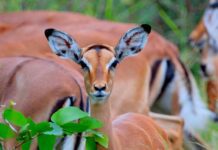
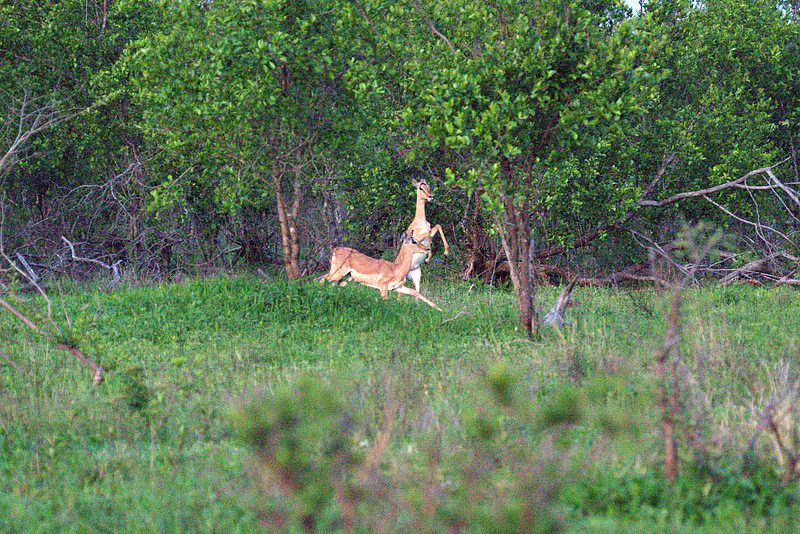
Crouching tiger, hidden dragon? Nope, just leaping impala. This particular antelope species gets ignored more often than not, due to their numbers.
Visiting guests who have never seen them before DO get excited at the first sighting. After that, unless they are dead and hanging in a tree with a leopard attached, they are mostly ignored.
A contemporary game drive is no longer about reciting what an animal is. It’s about revealing how it fits into the living, breathing system around it. It’s about context, connection and curiosity. Guests don’t want to tick species off a list; they want to feel as if they have stepped into the narrative of the bush itself.
Yes, seeing the Big Five still matters. Let’s not pretend otherwise. A first-time sighting of a leopard draped over a marula branch or a breeding herd of elephants crossing the road will always quicken pulses.
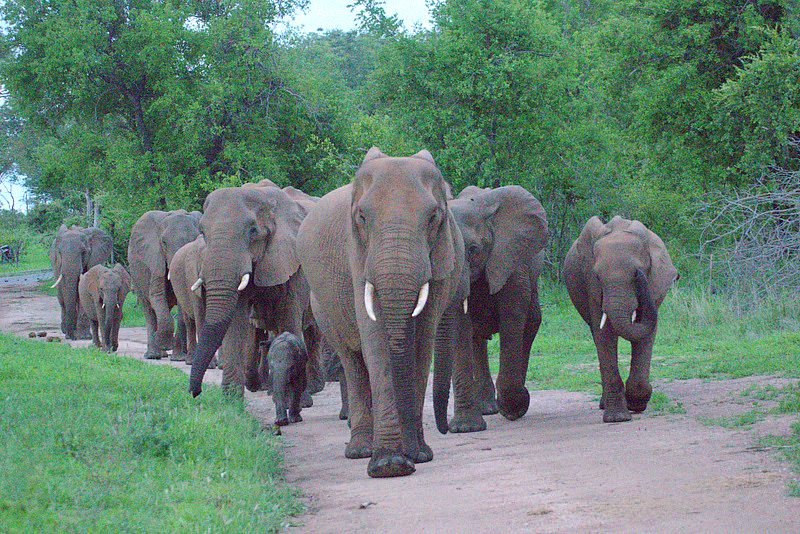
Heading towards a nearby waterhole, this breeding herd of elephants, led by the matriarch, is focused and single-minded in its quest for an evening drink.

But the most memorable drives are often defined by the moments in between: the dung beetle furiously rolling away its prize, the alarm call of a squirrel betraying a stalking predator, or the quiet complexity of a termite mound that functions like a natural air-conditioning system.
Modern guiding demands a shift from lecturer to storyteller, from instructor to interpreter. Guests don’t want to be spoken at; they want to be drawn in. A throwaway comment about a grass species can become fascinating when it’s linked to grazing patterns, rainfall cycles and the movement of antelope. A bird sighting becomes memorable when its call explains why the bush suddenly fell silent moments earlier.
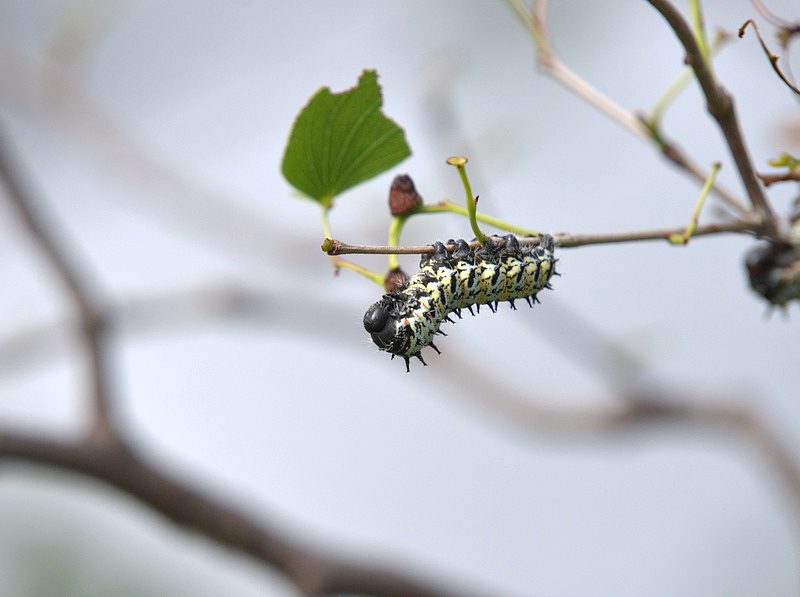
Mopane worms. I have eaten these, but I have never seen them live.
Crucially, this kind of guiding isn’t about showing off knowledge. It’s about reading the room—or rather, the vehicle. Different guests want different depths of engagement. Some crave humour, others reflection. Some are happiest with a few well-placed insights, while others want to unpack the bush layer by layer. The modern guide must be agile: entertaining without being flippant, informative without being pedantic, educational without slipping into performance.
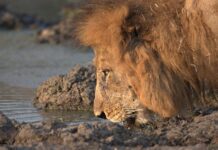
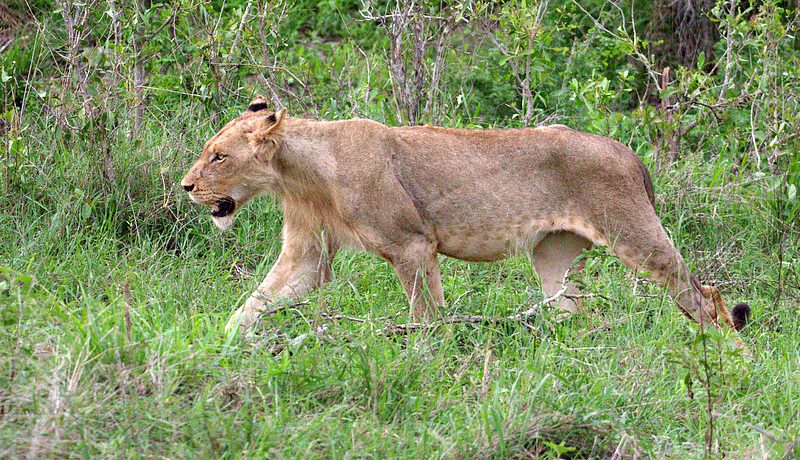
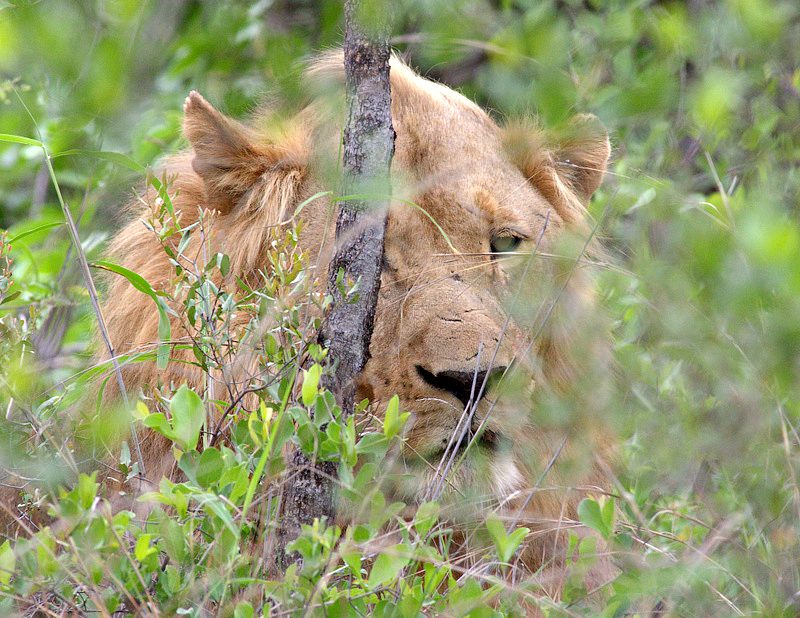
Although hidden, this lion’s presence is still appreciated by all those who get to witness sightings like this.
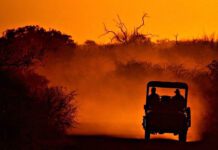
Professionalism remains non-negotiable. Safety, ethics and respect for wildlife still underpin everything. But professionalism no longer means stiffness or distance. It means confidence paired with humility, knowing when to speak and when to let silence do the work. Sometimes, the most powerful moment on a game drive is when the engine is switched off, and the bush is allowed to speak for itself.
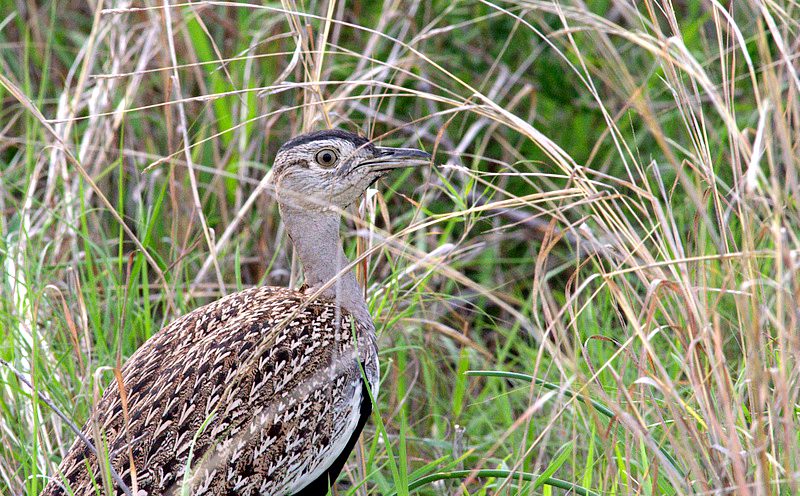
This is a Red-crested Korhaan.
Commonly known by its rather macabre nickname “the suicide bird” because of its spectacular (and seemingly reckless) courtship display. During breeding season, the male launches himself vertically into the air with rapid wingbeats, rising several metres above the grasslands. At the peak of the ascent, he gives a rasping, frog-like call and then abruptly drops back down into the grass.
From a distance, especially in the heat haze of the Lowveld, it can look as though the bird has simply shot up and then plummeted to its death. Of course, it hasn’t. It lands perfectly well — usually out of sight.
The display is energy-intensive and highly visible, which also makes the male vulnerable to predators. So while “suicide bird” is a dramatic exaggeration, there’s a kernel of truth in the sense that he’s taking a bold risk to advertise his fitness. In the wild, bravado often doubles as a courtship strategy.
And if you’ve ever been on an early morning game drive and heard that strange, croaking “kerrrr-kerrrr” call floating across the veld, you’ll know — the bush has no shortage of theatrical talent.
So next time you see one of these plummeting towards earth, know that there is a female nearby he is trying to impress.
Repetition, once the silent killer of guiding passion, is now more avoidable than ever. The bush is not static, and neither should a guide’s approach be. Every drive unfolds differently depending on weather, season, animal behaviour and even guest energy. The guide who treats each drive as a fresh conversation—rather than a rerun—keeps both guests and themselves engaged.
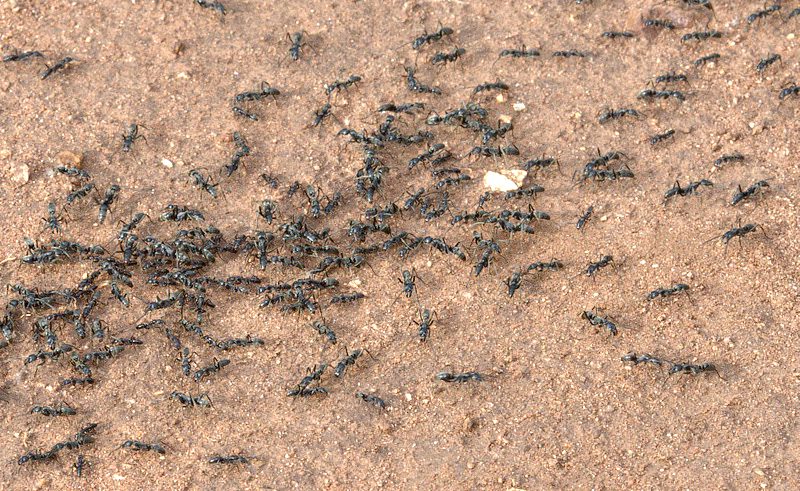
These used to be known as Matabele Ants. But times have changed and they are now referred to as Hissing Ants.
There’s also a growing need for emotional intelligence in guiding today. Guests are often seeking more than wildlife sightings. They want perspective, grounding, sometimes even solace. In a world saturated with noise and screens, the bush offers rare stillness. A skilled guide understands that their role is not to dominate that space, but to facilitate it.
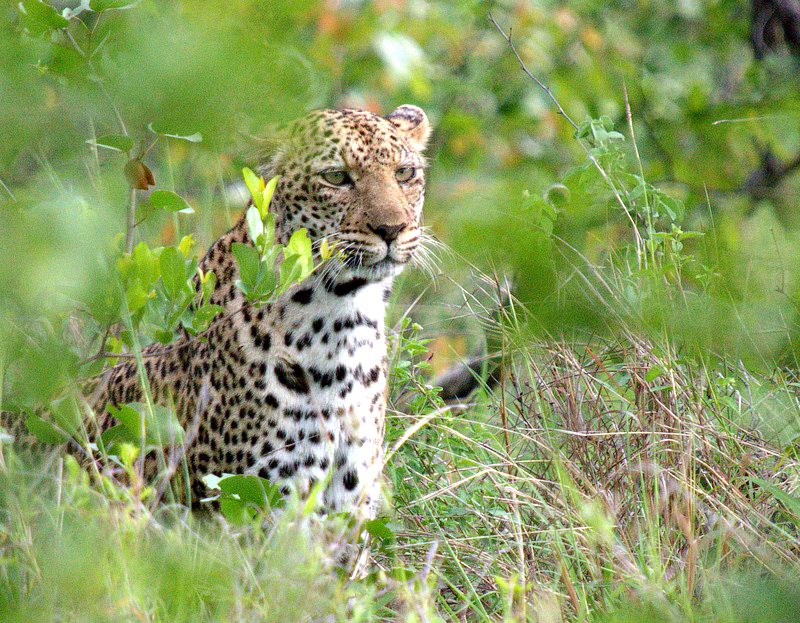
Leopards are always an awesome sighting and one that never fails to get the adrenaline pumping.
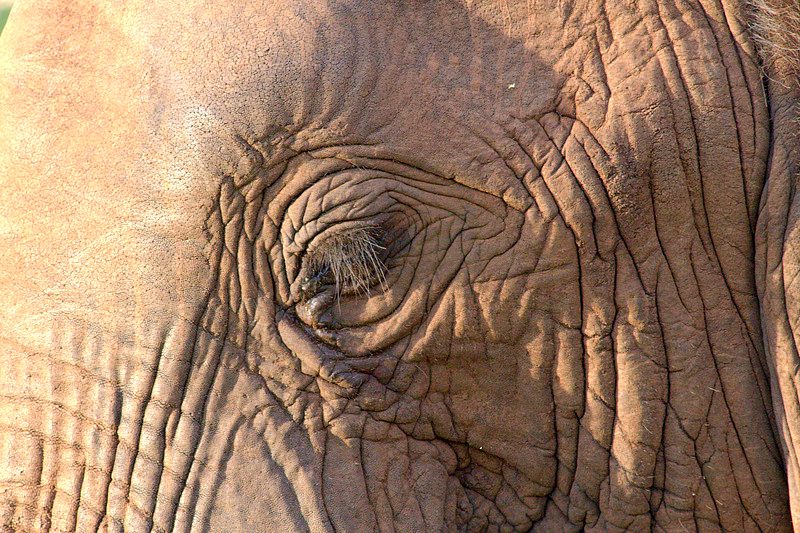
Looking into the eye of wisdom?
The guide, then, is no longer a walking field guide with a microphone. They are a translator of landscapes, a curator of moments, and occasionally, a quiet companion in awe. When that balance is struck—between knowledge and narrative, facts and feeling—the game drive transcends its vehicle and becomes what guests truly seek: an immersive encounter with the wild, not just a drive through it.
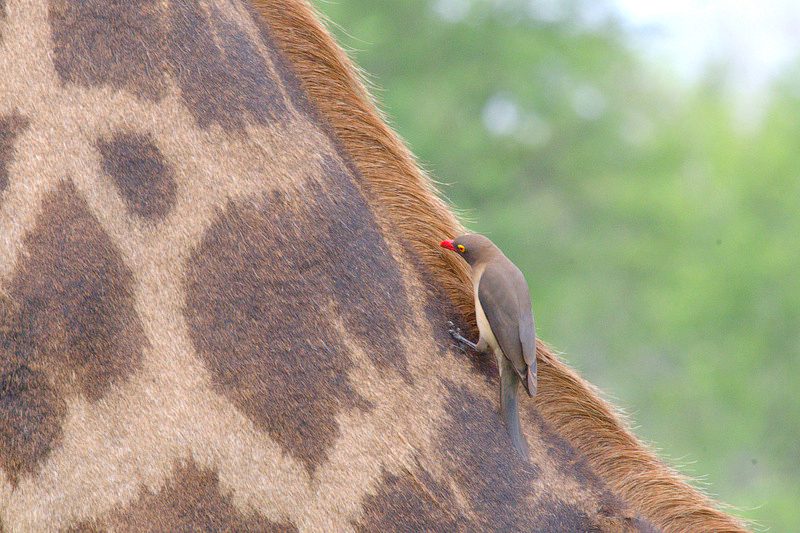
Guides will teach you that if you only learn ONE bird call, it needs to be that of the Yellow-billed Oxpecker. Why? Because they are usually found on dangerous game, such as buffalo, and can act as an alarm for humans on foot.
Modern drives are therefore a source of education, information and entertainment. All the while being cognizant of your surroundings and the environment.
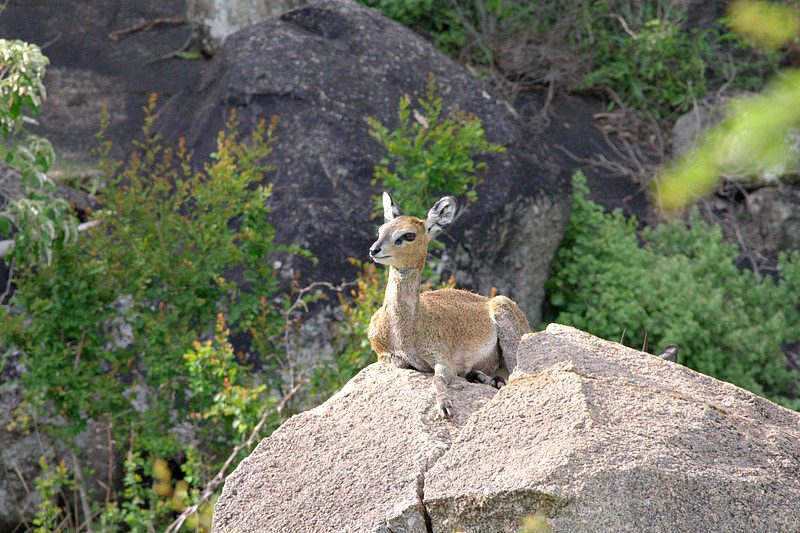
Not so much a Klipspringer as a Klipsitter.
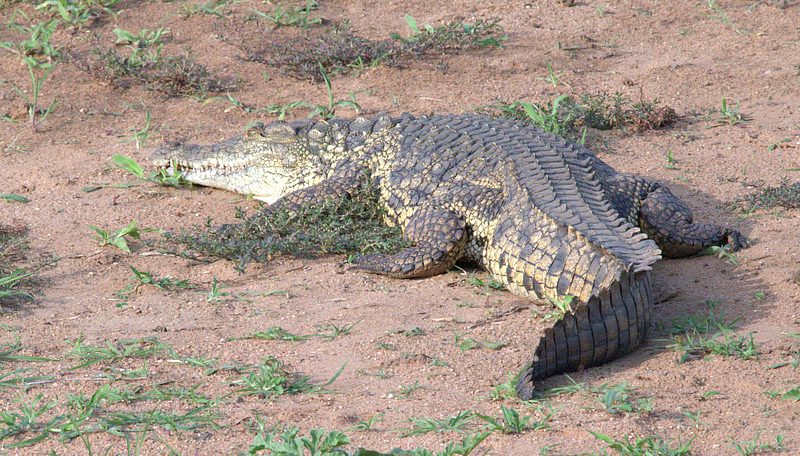
They were here before Homo Sapiens were recognised as a species, and crocodiles will be here long after we have left.
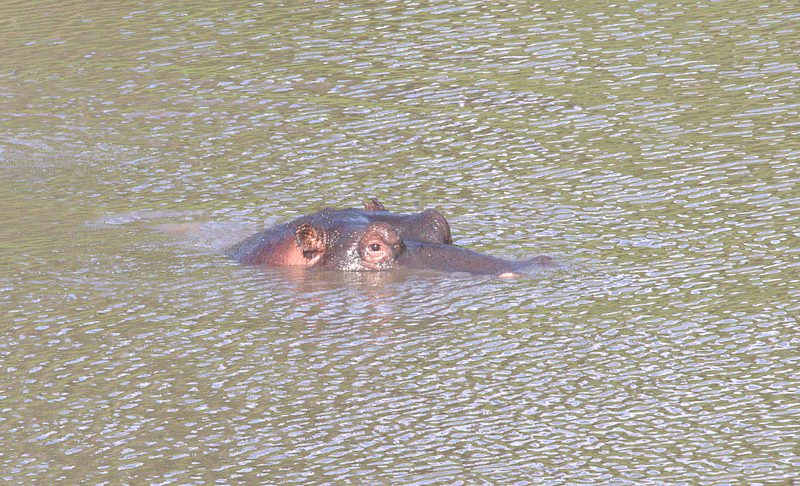
If a buffalo looks at you as if you owe it money, how does a hippo observe you?
Hippos have a reputation for being responsible for more human deaths per year than all of the Big 5 combined. Scientists are now challenging that, claiming that many of those deaths could be attributed to crocodiles if they were reported.
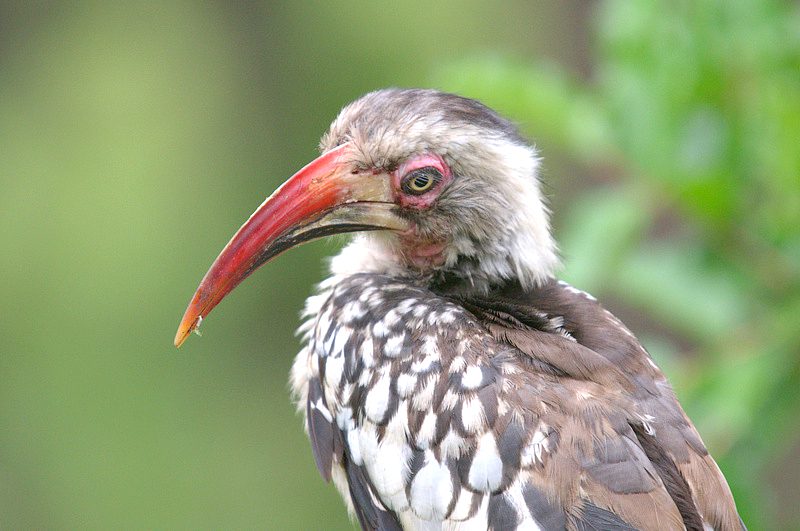
Disney made this species, as Zazu, famous in The Lion King, along with Meerkats, Warthogs and Hyena.
I have attempted to structure this Blog post similarly to how a modern game drive could be conducted.
Yes, there are facts and figures; however, I am hoping that the manner in which they are conveyed will educate, entertain and inform.

Experienced during a game drive while at this camp.
To find out more about what the Lodge offers, click on the logo above.


Travel & Things is the proud winner of these prestigious awards from the digital British lifestyle magazine Luxlife.
The awards are in the categories:
Best Travel & Experiences Blog 2024 – South Africa
Best African Game Reserves & Lodges Travel Review Site 2025.
Best African Resorts and Retreats Award 2025.

See who the guests have been since the inception of this YouTube channel.
Click on the logo above.

Looking for something to read? Click on the logo above to visit the Off the Shelf YouTube channel for interesting and up-to-date interviews and book reviews.

“Hard work never killed anybody, but why take a chance?”
Edgar Bergen
All images are the copyright property of

and may not be used without permission.

All images used in Travel & Things posts are edited using Ribbet software. To learn more about the product and what it offers both amateur and professional photographers, click on the logo above.