


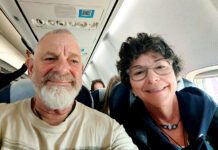


This visit to Oudtshoorn was part of the last leg of a 21-day road trip that Caro and I undertook.
Some years ago, I visited with my child; this time, it was the turn of my wife to share my patriarchal past.
I would have liked to find the house that my Dad lived in, unfortunately, as my Dad and all his siblings have died, there was no one who remembered.
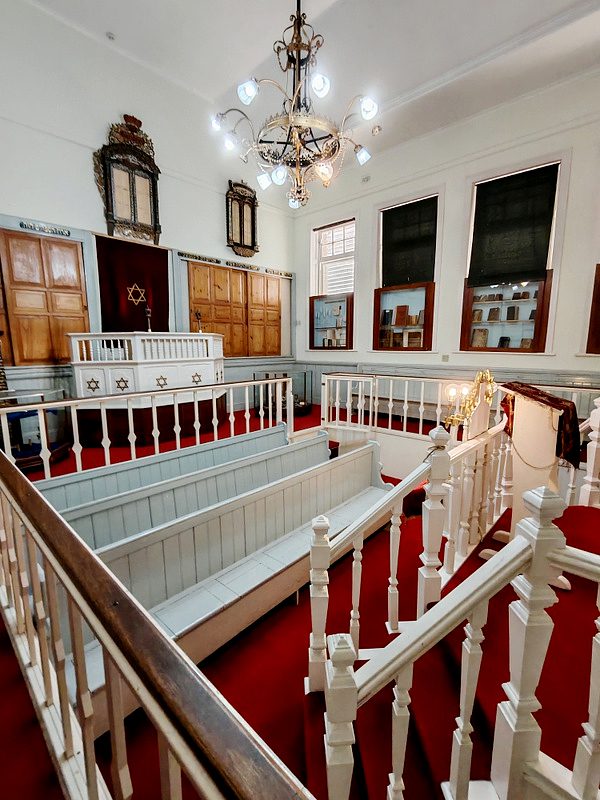
My first port of call was the CP Nel Museum, where one of the most compelling exhibits is the synagogue gallery. An authentic reconstruction of the breakaway St. John Street Synagogue from 1896.
The split between this and the Queen Street shul was due to the Orthodox members from Kelm.
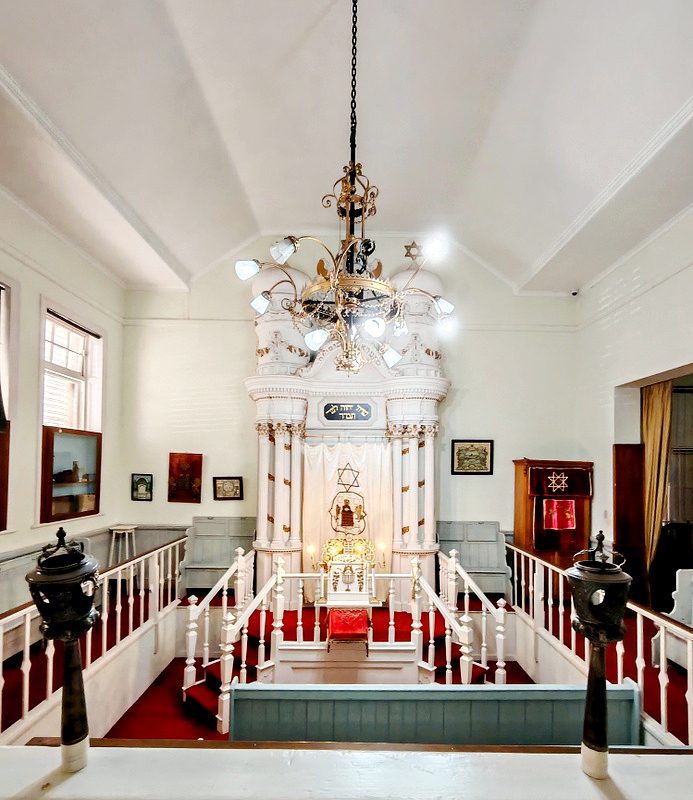
Here we spent time admiring the ark, the bimah, the ceremonial silver and religious paraphernalia, all of which speak to a community that was thriving here in the early 20th century, with shops, synagogues, schools and feathers.
The gallery quietly reminded us that the ostrich-industry prosperity wasn’t just about feathers. It was about people, culture and migration. Whilst wandering past the velvet parokhoth (curtains), intricate menorahs, and photo-boards of Jewish pioneers, we felt part of a narrative that connected rural South Africa with Europe.
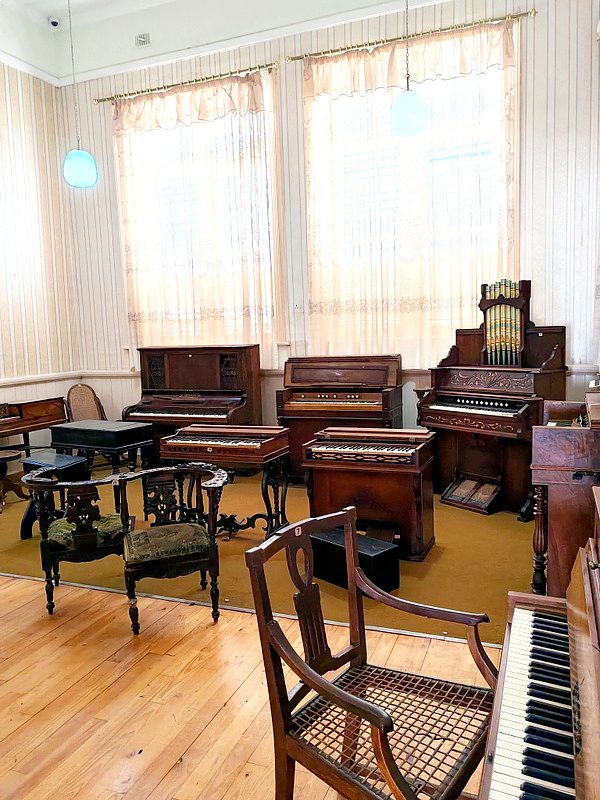
Instruments like these tell a story of leisure, prosperity and social life in a town flush with feather wealth. Families danced in ballrooms, orchestras played at gala events, and music was a mark of status.
The presence of multiple organs and keyboard instruments speaks to that era’s ambition and cultural aspiration, even in a semi-arid Karoo town.
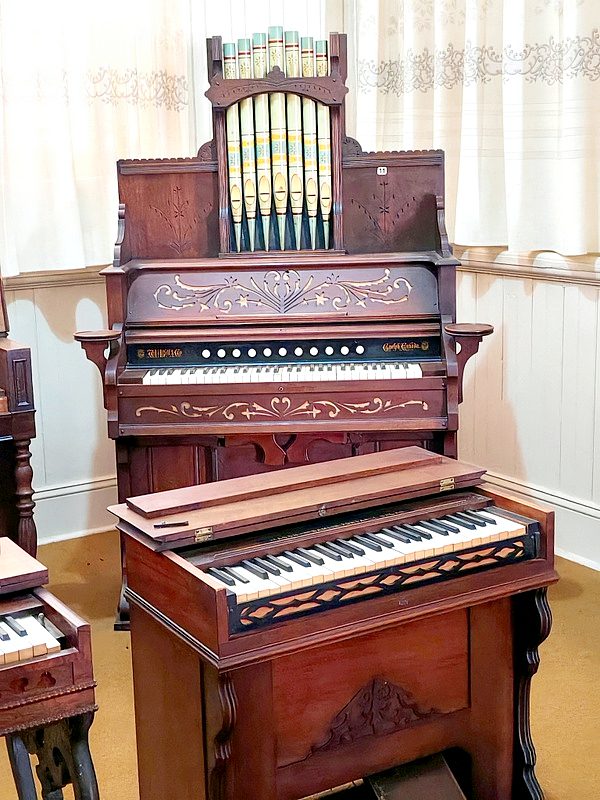
What was fun is the mix of the grand and the quirky: an early 20th-century pump organ might nestle beside a Victorian piano or a brass instrument used by the local brass band of the ostrich-boom days.
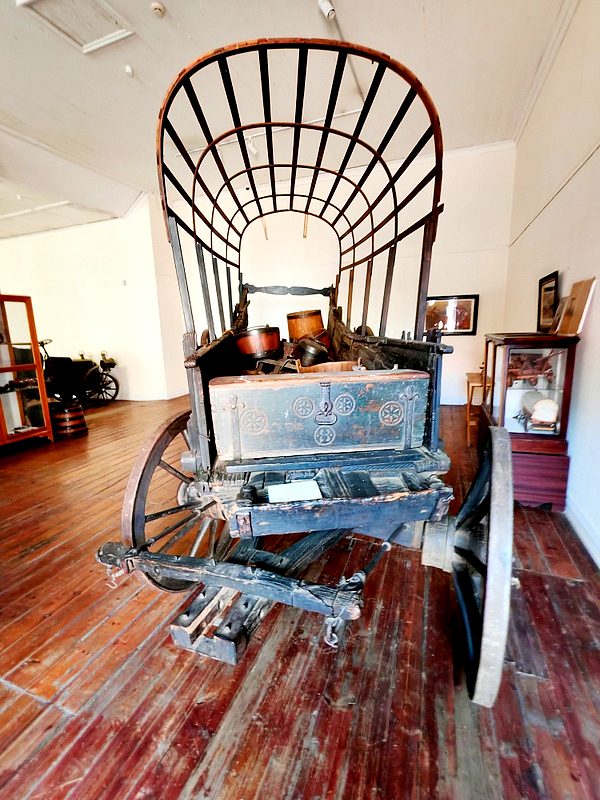
Standing in the quiet of the motor hall, the creaking of this trek wagon can only be imagined.
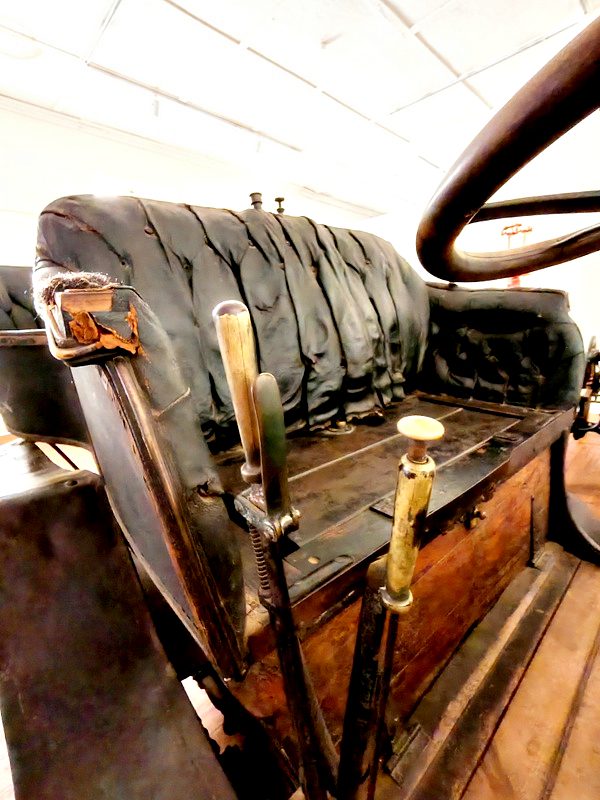
This is the interior of a Panard 1904.
Originally owned by Dr F MacDowell of Calitzdorp, it was sold to CP Nel in 1926 by the then-owner, Frikkie Strydom (Snr)
In 1936, it was one of the first items which started the museum collection!
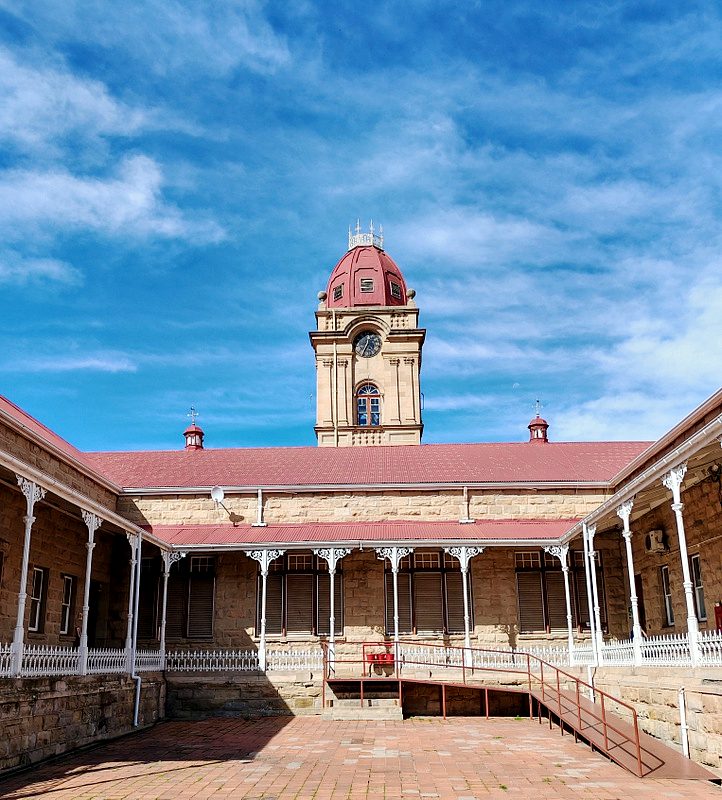
The quad at the CP Nel Museum was built when it was still a school.
The school thrived for decades, producing many of Oudtshoorn’s leading citizens. However, as time passed and education facilities expanded elsewhere, the old school building fell into disuse.
In the 1970s, it was repurposed and restored to become the C.P. Nel Museum, named after Cornelis Petrus Nel, a local businessman and history enthusiast whose personal collection of antiques and memorabilia served as the foundation for the museum’s exhibits.
Listen carefully, and you can still hear children at play here.
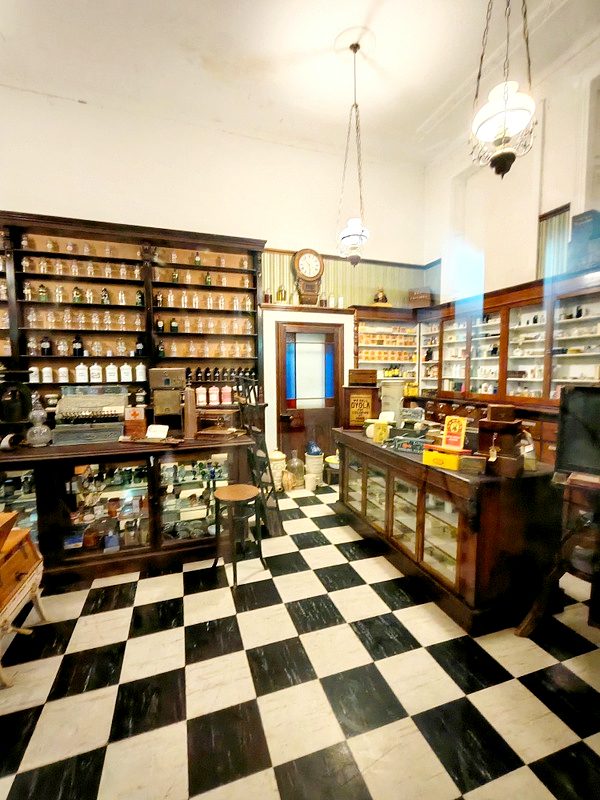
Today, traces of its educational past remain. Classrooms transformed into pharmacies, chalkboards still faintly visible under layers of history, creating a rare blend of nostalgia and preservation that reflects Oudtshoorn’s layered heritage.
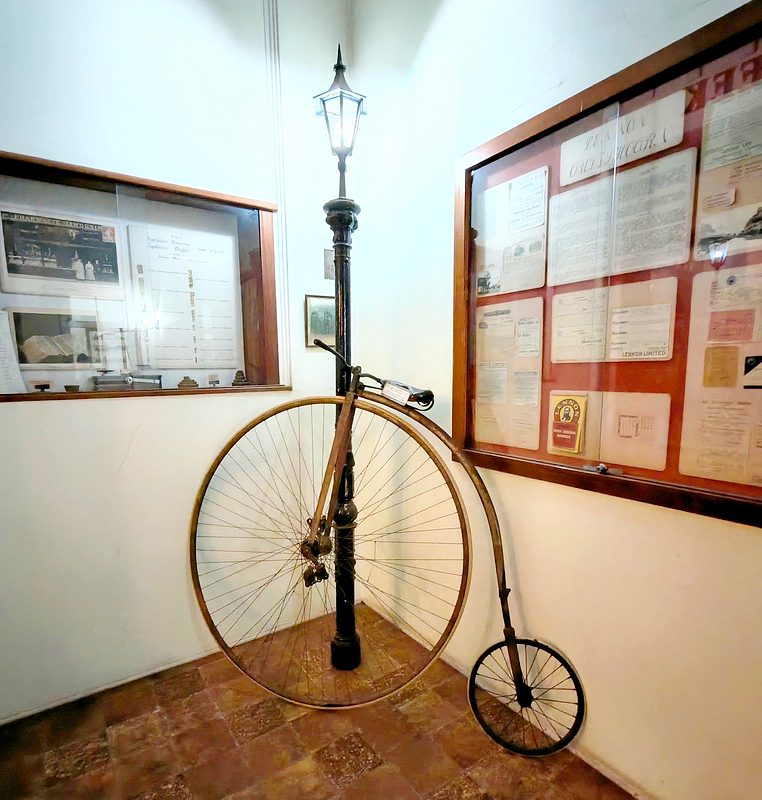
In a place built on flightless birds and feathered fortunes, the C P Nel Museum lifts off in unexpected directions: faith, music, community, culture.
Visit the museum and you’re not just learning history, you’re feeling it echo through the halls.
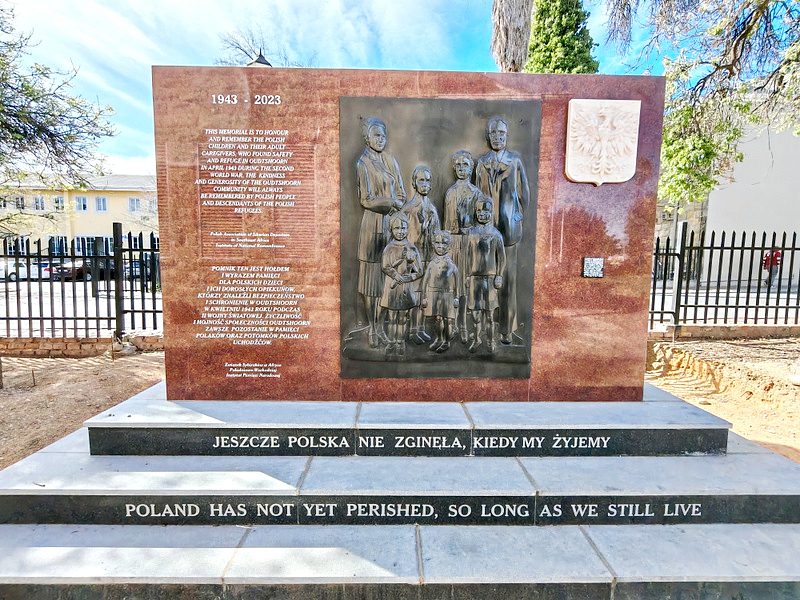
The recently erected Polish Monument in the grounds of the museum commemorates a little-known and deeply moving chapter of World War II history.
In April 1943, some 500 Polish children, orphans who had been deported to Siberia, arrived in South Africa and found refuge in this Klein Karoo town.
Many of these youngsters were Jewish, and the sacrifice, resilience and gratitude of this community have since become part of the region’s layered heritage.
The monument, unveiled in September 2023, features carved reliefs of five children and two adult carers, symbolising the journey from war-torn Europe to safety under the South African sun.
The designs of the Polish White Eagle and Siberian Eagle perched above the figures draw attention not only to the orphans’ origins but also to the strength they carried.
This memorial stands as a tangible reminder of South Africa’s role as a place of sanctuary, and of the kindness shown by the community of Oudtshoorn that welcomed the children and supported their education and care.
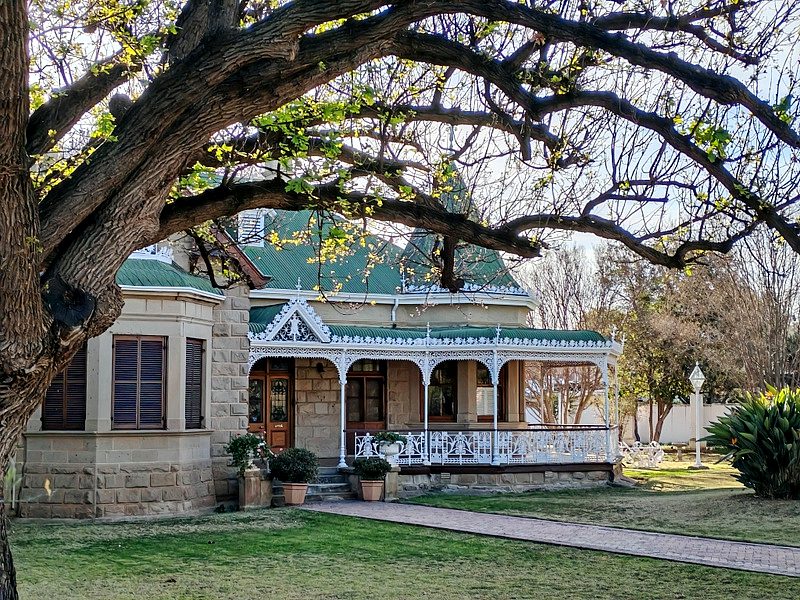
This is Mimosa Lodge, which was designed by Charles Bullock for Mr Robert Sladowsky
Built in 1907, it has only been owned by 7 families.
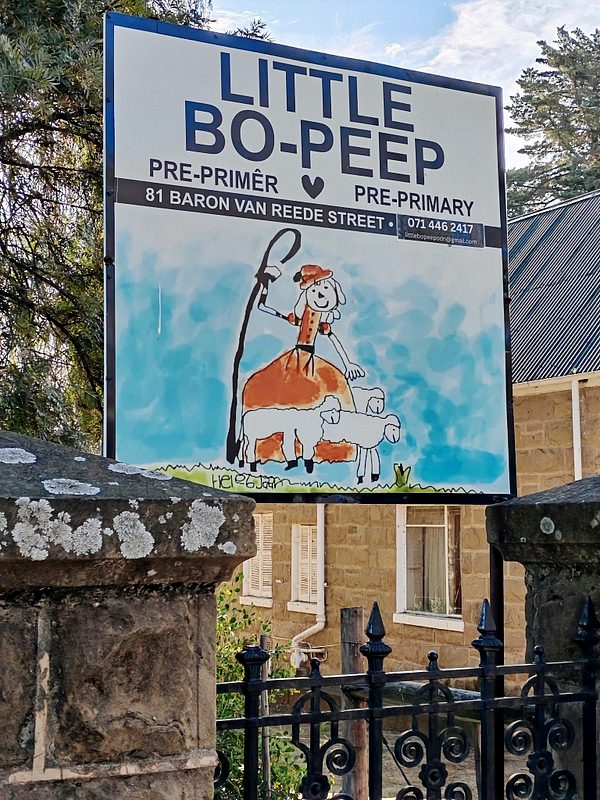
I am certain that when my Dad attended this pre-primary school, it had another name.
On a previous visit to the town, I met a man here who enquired who I was.
That is the thing about small towns, everybody either knows you or wants to know to whom you belonged and why you are in town.
When I explained my connection to Oudtshoorn, he immediately told me that he and my Dad had attended this school and played here together.
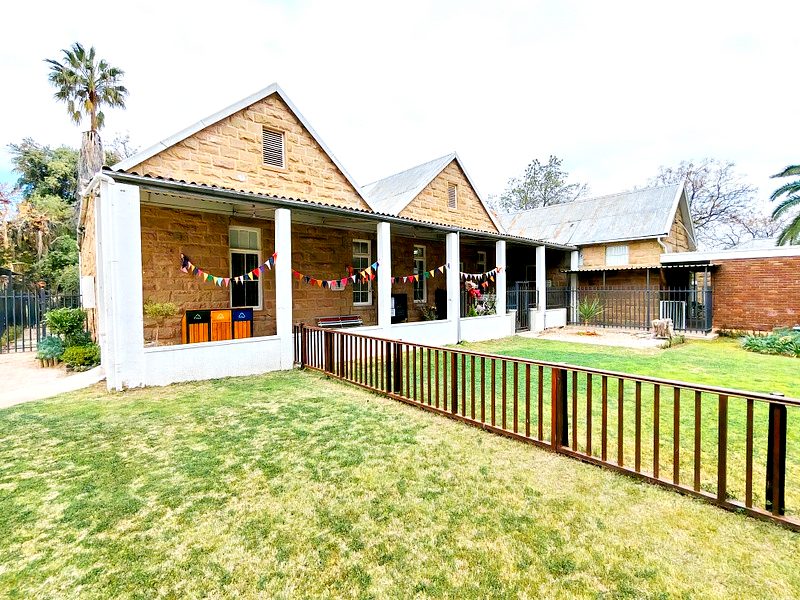
The pre-primary school is situated behind the more familiar façade of the old Queen Street Synagogue.
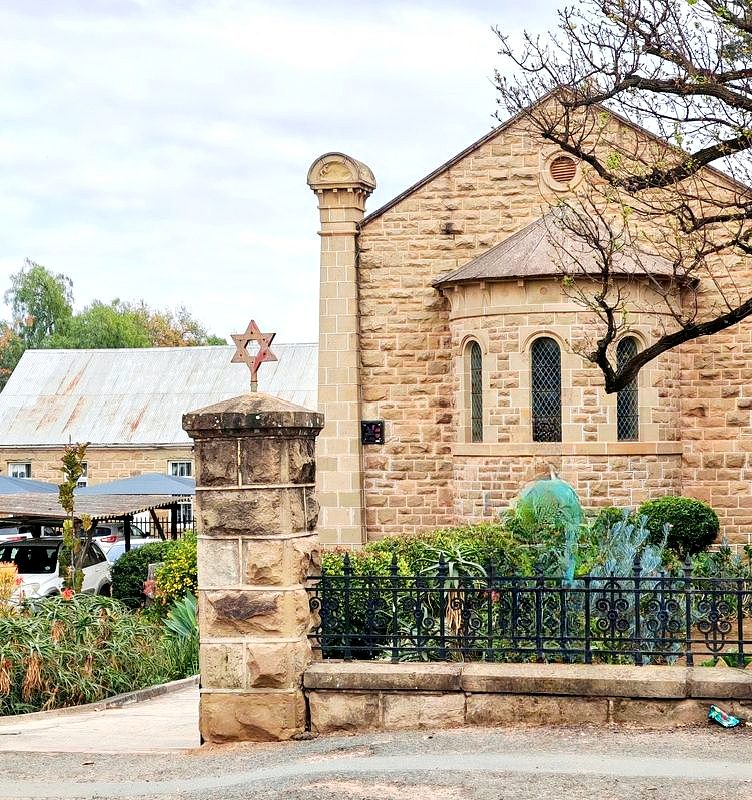
The synagogue was more than just a religious venue — it was a gathering place. Festivals, weddings, and High Holidays brought the community together, filling the small space with song, laughter, and the soft rustle of prayer shawls.
Even today, standing inside, you can almost hear the faint hum of those celebrations, the sound of Hebrew prayers mingling with Afrikaans greetings and English conversation — a uniquely South African tapestry of faith and friendship.
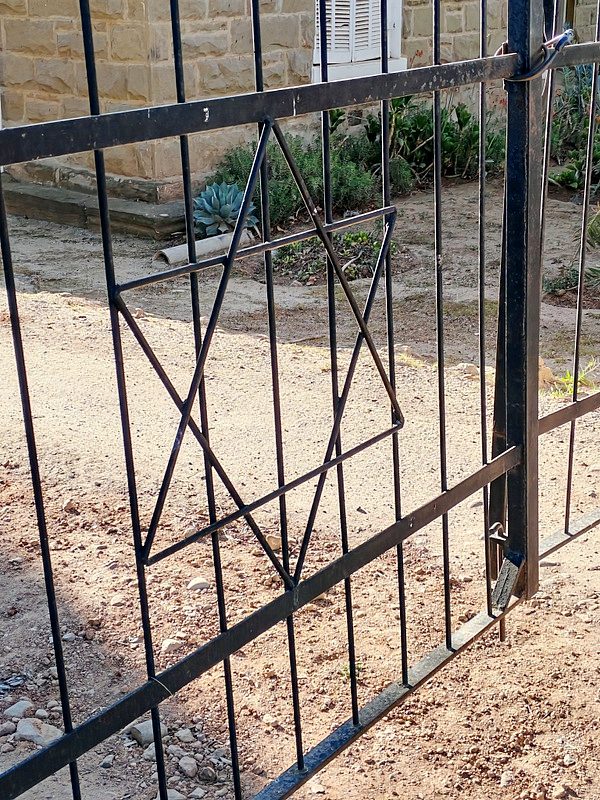
For more than a century, this small sanctuary has been a spiritual and cultural cornerstone for the Jewish community of the Klein Karoo.
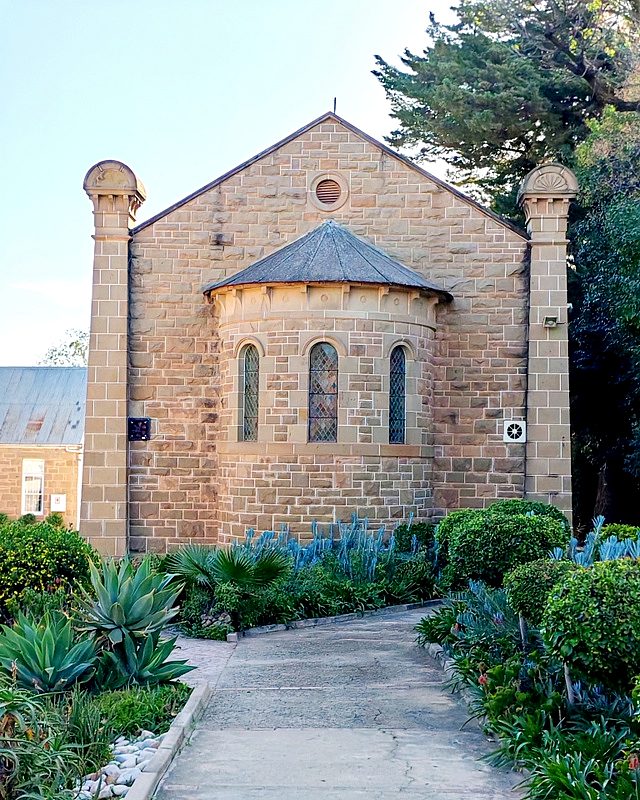
The Queen Street Synagogue was opened in 1888 and was consecrated in 1889. This modest building replicated the style of synagogues in Eastern Europe, as most of the original 250 Jewish people who arrived here came from Lithuania.
In 1896, a group of Orthodox Jews from Kelm broke away to form the St John’s Synagogue.
The interior of that place of worship can now be viewed in the CP Nel Museum.
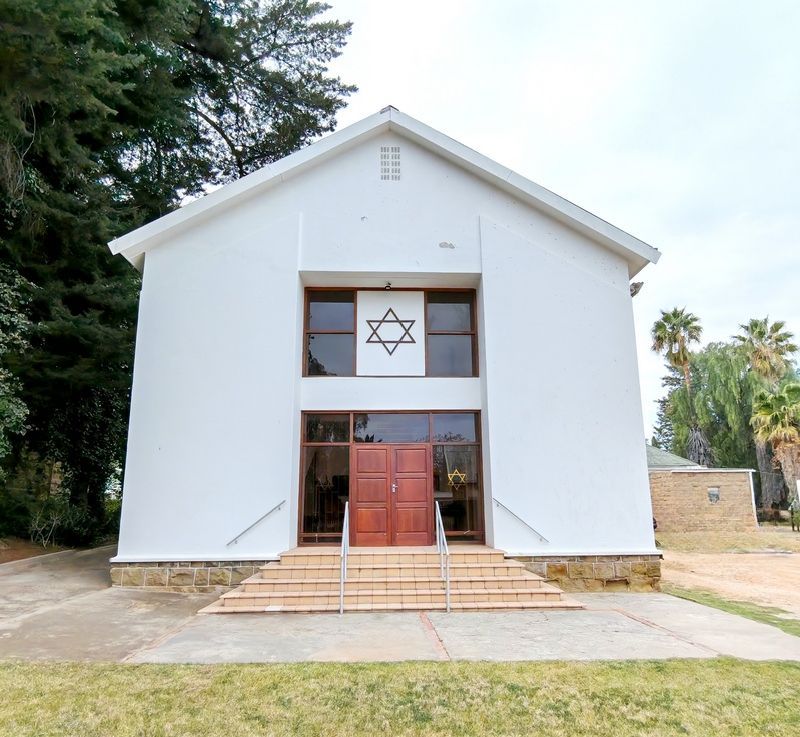
Behind the rather plain facade lies the last active shul in Oudtshoorn.
Why did the Jews do so well in the area? It seems that Yiddish was similar to Afrikaans, and they could interact with the local farmers.
At one point, Oudtshoorn was known as Little Jerusalem, which is ironic as the State of Israel only came into being in May 1948, and all of the Jews who settled here were from countries in Eastern Europe.
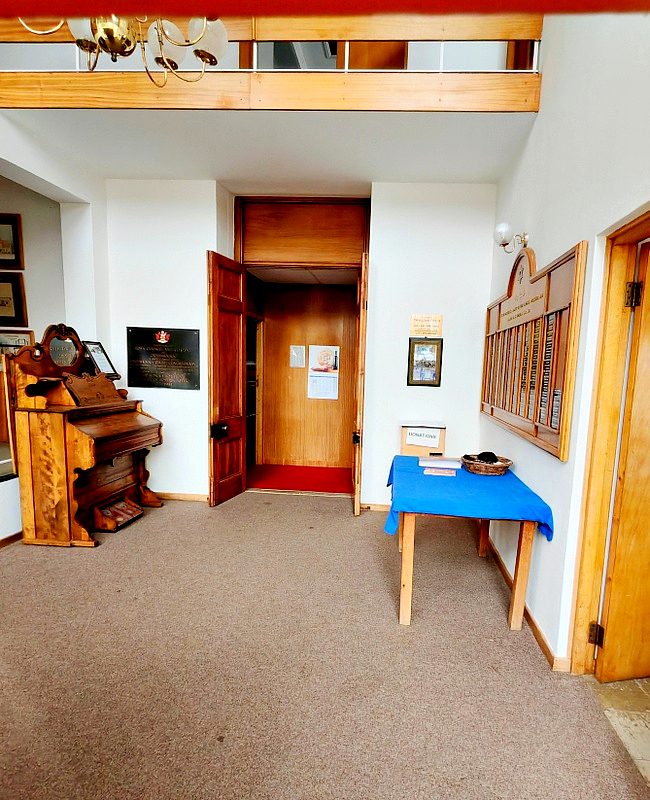
Walking through its doors feels like stepping back into a gentler time. The scent of polished wood mingles with the faint dust of memory, while the afternoon light, filtered through tall windows, dances across pews that have felt the weight of generations.
For many, including my late Dad, this synagogue was more than a place of worship — it was the heart of a vibrant community bound by faith, tradition, and the unspoken understanding that even in a small town, far from the bustle of the cities, a sense of belonging could flourish.
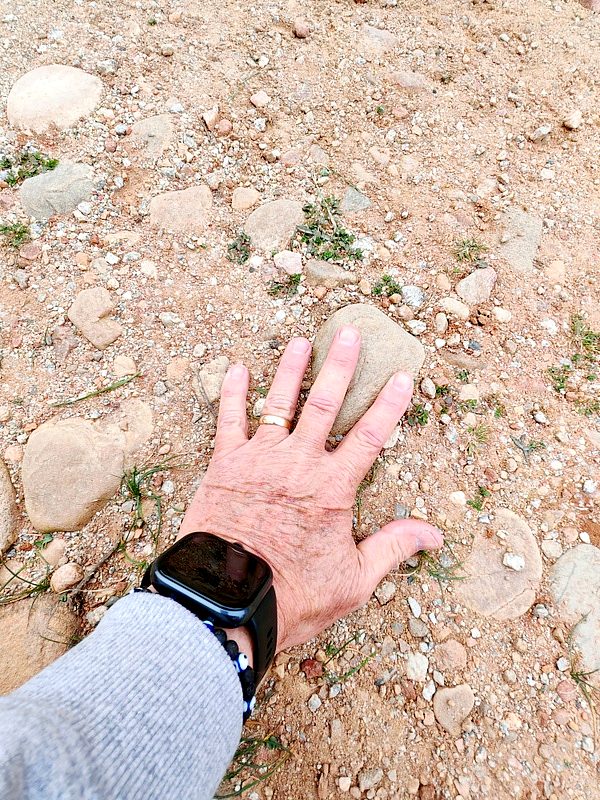
For me, returning to the Queen Street Synagogue is a deeply personal experience. It is a journey through time, memory, and identity, a reminder of where my Dad came from, and of his values that still guide me today. To stand where he once stood, to touch the same wooden pews and breathe the same air, is to bridge generations in a way that words can barely describe.
With my hand resting on the barren ground behind the Shull, I felt time collapse into a single moment.
In that instant, touching the same ground where he once played and worshipped, I was reminded that heritage is not only found in buildings or photographs.
It lives quietly in the earth, in the spaces that connect who we were, who we are, and who we continue to become.


Travel & Things is the proud winner of these prestigious awards from the digital British lifestyle magazine Luxlife.
The awards are in the categories:
Best Travel & Experiences Blog 2024 – South Africa
Best African Game Reserves & Lodges Travel Review Site 2025.
Best African Resorts and Retreats Award 2025.

See who the guests have been since the inception of this YouTube channel.
Click on the logo above.

Looking for something to read? Click on the logo above to visit the Off the Shelf YouTube channel for interesting and up-to-date interviews and book reviews.

“Hard work never killed anybody, but why take a chance?”
Edgar Bergen
All images are the copyright property of

and may not be used without permission.

All images used in Travel & Things posts are edited using Ribbet software. To learn more about the product and what it offers both amateur and professional photographers, click on the logo above.