













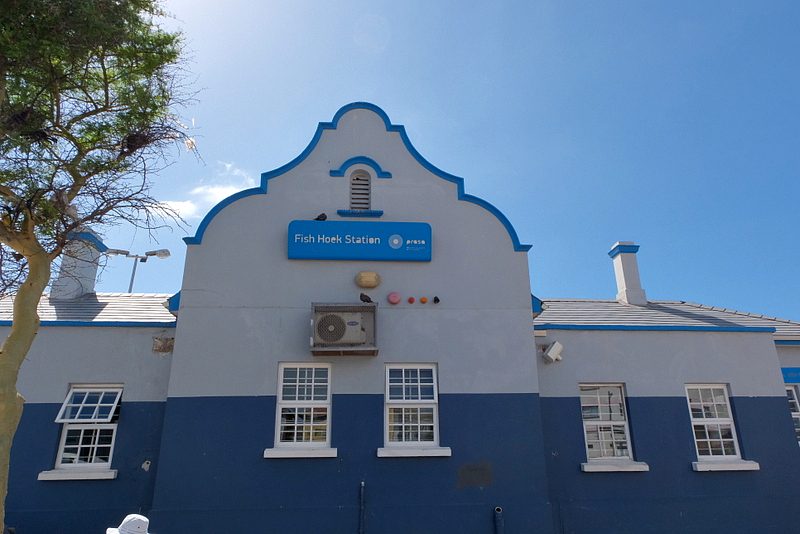
There are seaside towns, and then there’s Fish Hoek — a serene stretch of sand and smiles on the False Bay coast where the mountains cradle the ocean, the waves whisper “coffee o’clock,” and the locals treat charity shops like treasure troves. But how did this charming village with a dry-town legacy end up being such a hive for quirky cafés and good-cause boutiques? Pull up a deck chair — this story tastes like a long black with a shot of history.
Fish Hoek’s name appeared on some of the earliest Dutch maps of the Cape as Visch Hoek or Vissers Baay — meaning “fish corner” or “bay of fishermen.”
The bay was a natural fishing spot long before it was a township, with early Europeans and locals drawn by the bountiful sea and mild climate.
However, one of the quirkiest parts of Fish Hoek’s history began not with fish but with a rule: in 1818, land in the area was granted on the condition that no public wine house or liquor outlet be established there — essentially making Fish Hoek one of South Africa’s few historically dry towns.
That law, meant to keep sailors sober on their way to Simon’s Town, lingered in planning rules for nearly 200 years, shaping the town’s character well into the 21st century.
That absence of bottle stores and bars — for a long time at least — helped steer the town’s social life toward coffee, conversation, community, and causes rather than pubs and pubs’ associated crowds.
The first bottle store in Fish Hoek officially opened on June 4, 2019.
Fish Hoek is officially a suburb of Cape Town.
That said, it feels like a small seaside town — and historically, it functioned very much like one. It had its own municipality for many years before being incorporated into the greater Cape Town metropolitan area in the late 20th century.
Administratively, it is a suburb of Cape Town. Historically, it was an Independent municipality, and Atmospherically, it is a Classic coastal town with strong village energy.
Fish Hoek could easily become home. Much like Linden, except it has a sea view.
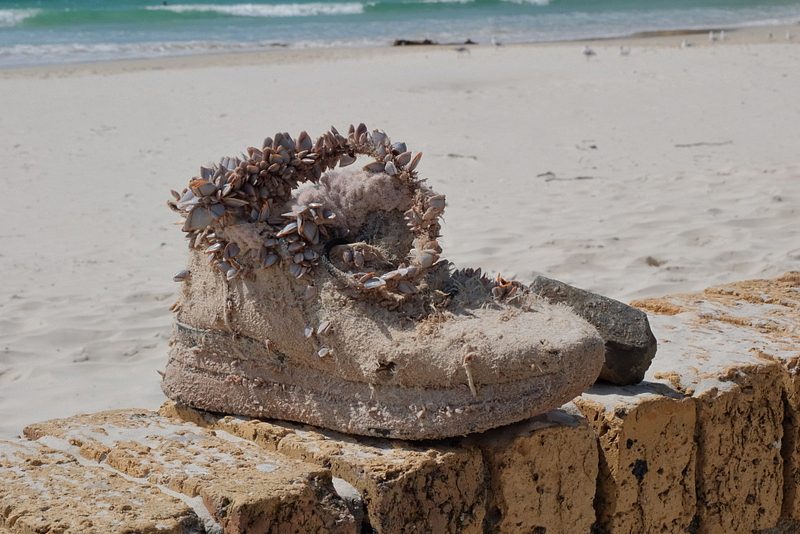
What might be the backstory to this shoe that I found on the beach in Fish Hoek?
Somewhere along the way, this shoe lost its partner. A hurried packing session. A windy afternoon. A moment of distraction. One shoe was left behind like a punctuation mark at the end of a sentence.
The ocean, as it does, claimed it briefly — tumbling it, encrusting it with sand, letting barnacles take hold. The remnants of their shells now clinging to its rim suggest it drifted, lingered, perhaps caught in kelp beds before being gently returned to shore like a message in a bottle.
Obviously placed on this low wall by a well-meaning passerby, it now rests, encrusted and silent, no longer owned, but carrying a story. A reminder that even the smallest objects travel further than we imagine.
And perhaps someone, somewhere, is still wondering what became of their missing shoe.
Could that possibly be true? You decide…
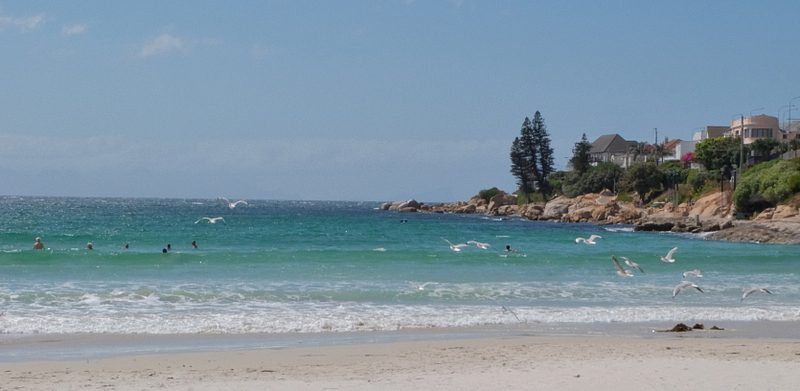
Fish Hoek’s long, sheltered bay is a magnet for swimmers, surfers, retirees, and commuters who enjoy a laid-back pace and scenic environment.
I must go down to the sea again…
Part of Fish Hoek’s charm lies in how its history ripples into everyday life. The cafés are where plans are made, ocean views are admired, and waves of community connection flow freely. The charity shops are places where every purchase counts — not just for you, but for someone else who benefits from that shop’s mission.
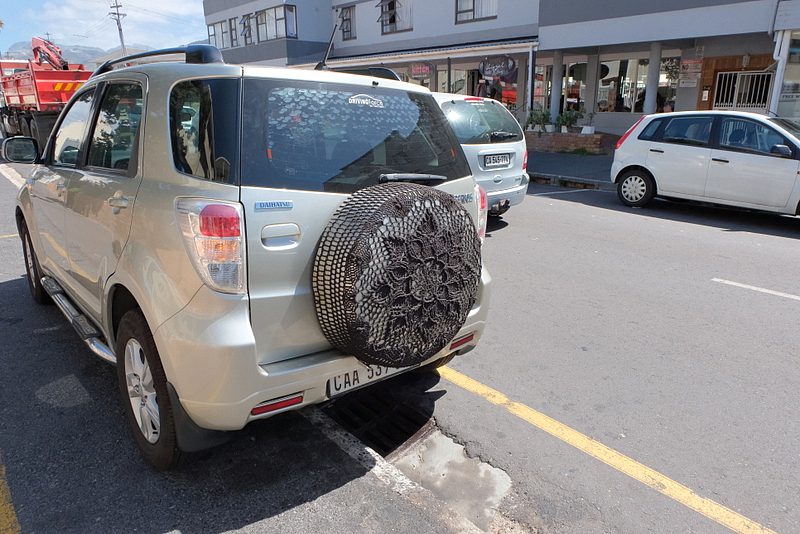
A somewhat quirky spare tyre cover. This is indicative of the type of people found in this suburb. Just a little different, but welcoming and friendly.
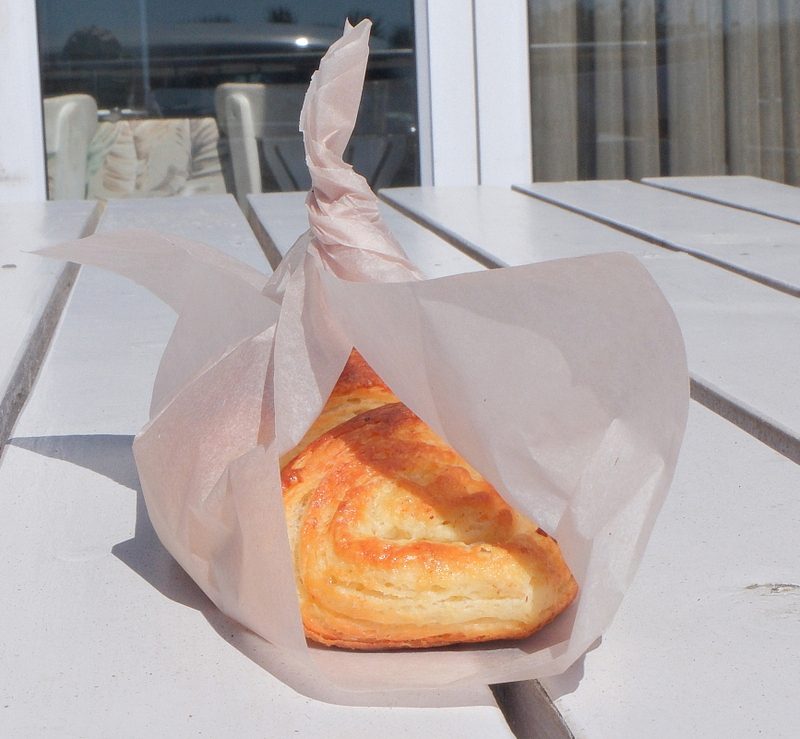
It was International Croissant Day when I visited C’est La Vie Bakery, hence my stopping to purchase one to accompany me on my perambulations around this seaside town.
It was so delicious that it barely lasted the length of a block.
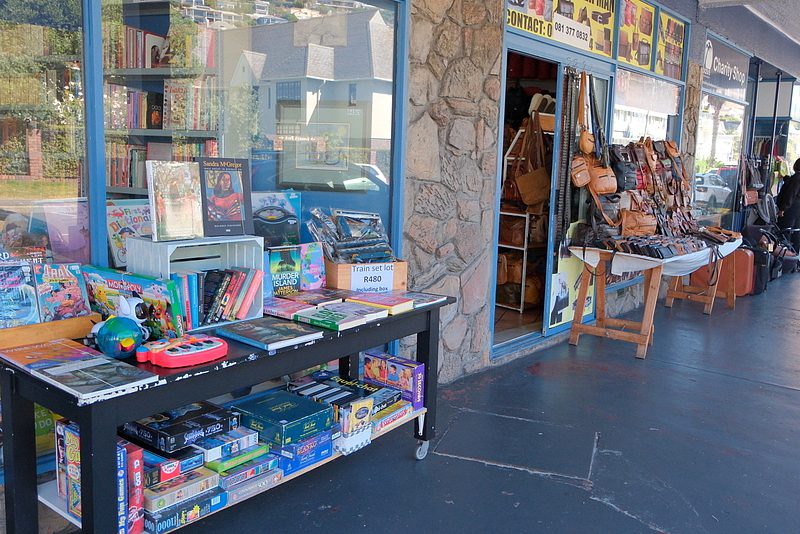
Café culture is only half the story. Step onto either Recreation Road or Main Road, and you’ll find several charity and thrift shops.
These aren’t just retail outlets — they’re social enterprises, treasures of pre-loved goods, and sometimes the heartbeats of local fundraising. Why do so many exist here? A few key reasons:
Fish Hoek has always had a stable, close-knit community spirit. Small coastal towns often foster grassroots initiatives, and charity shops provide a way to support local causes — from hospice care and shelter programs to disability support. In other words, shopping here can feel like giving back.
Pre-loved fashion, books, and homely wares are exactly the kind of things that fit a town where people enjoy slow living, minimal waste, and a good bargain. Add in regular donations from generous locals, and shelves are constantly refreshed with unexpected finds.
With so many cafés, casual morning strolls often lead to popping in for a browse — and that is a recipe for thrift-shopping success. Local organisations often combine their shops with a nearby coffee stop, making it easy to do a little good while treating yourself.
Charity begins at home? Well, not actually at home, but in Fish Hoek.
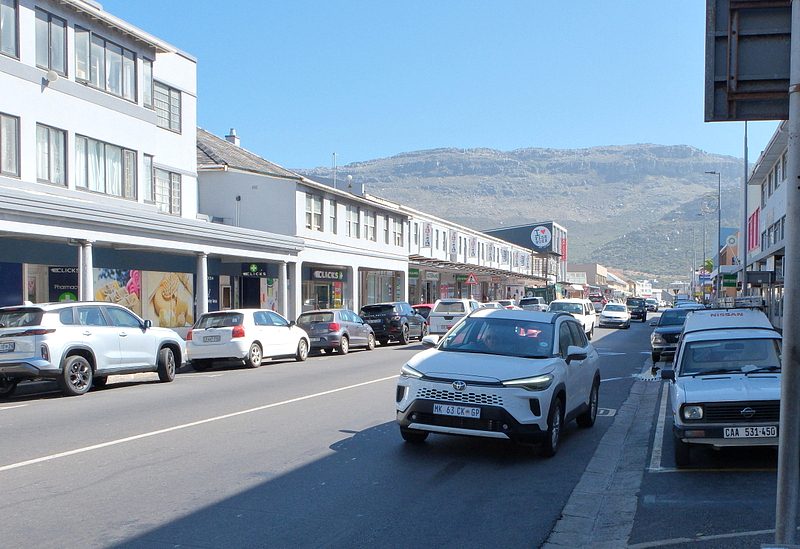
What makes this small town so popular with young and old alike?
Without pubs to dominate the social scene, cafés filled the space instead. Small business owners here aren’t trying to be corporate — they’re aiming to be memorable, warm, and fun.
This is Main Road.
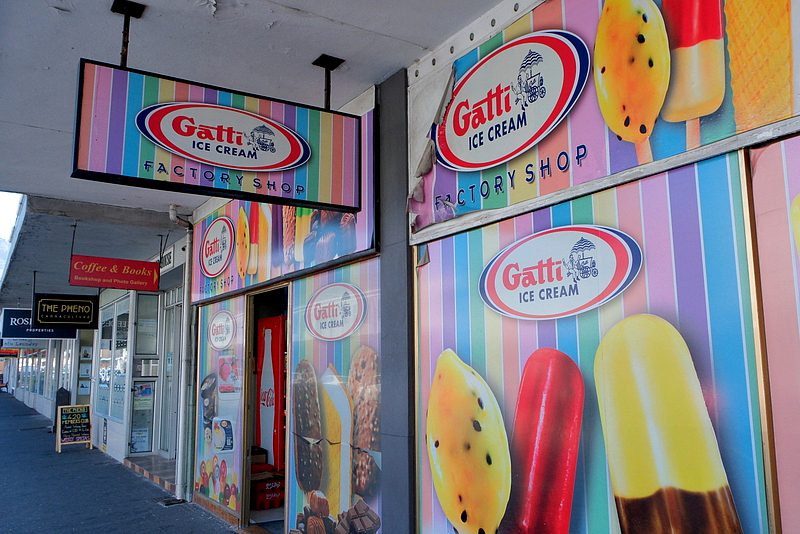
It’s no wonder that Main Road feels less like a commercial strip and more like a slow parade of experience — a place where names are clever, not corporate; where espresso and empathy sit side by side; where charity and community aren’t just concepts, but streetside habits.
I scream, you scream, we all scream for ice cream! I found this on Main Road.
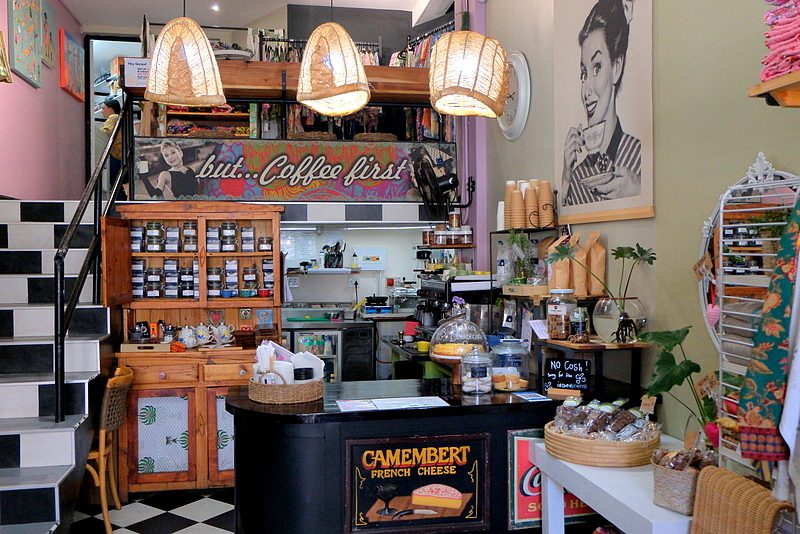
Walk along Main Road on any morning, and you’ll soon understand why Fish Hoek’s cafés feel like local living rooms with sea views.
Where to begin with the plethora of coffee shops on offer?
Perhaps we can start here at Gawjus? This is much more than just a coffee shop—an intimate space to work while hiding from the passing parade. Very friendly staff, and wi-fi is available.
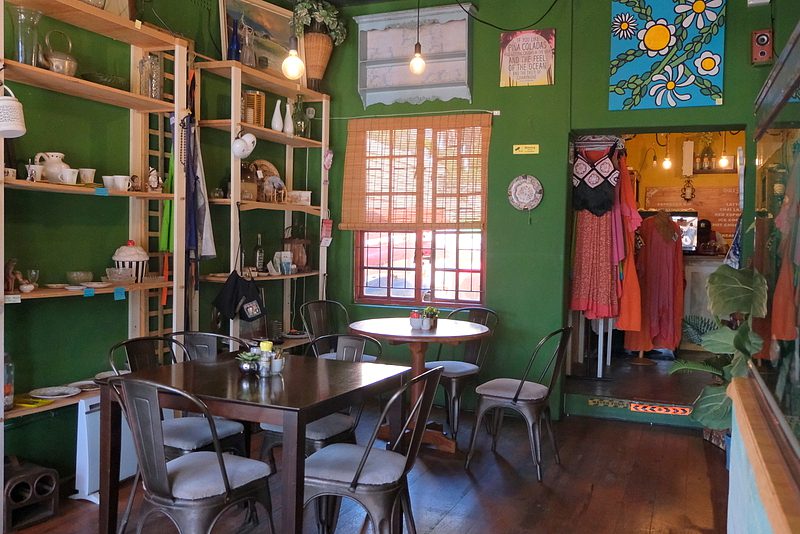
This is just a corner of Chalk and Cheese Cafe, a venue at the top end of Main Street that my wife discovered almost by accident.
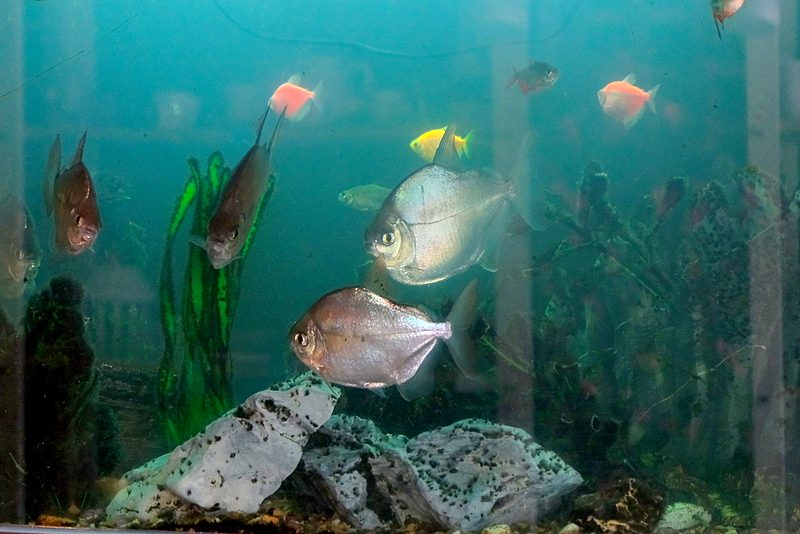
Not for eating. But there is fish on the menu at Chalk and Cheese Cafe, where I found this fish tank. However, they are almost hypnotic to watch while you enjoy your coffee with either a sweet or savoury meal or snack.
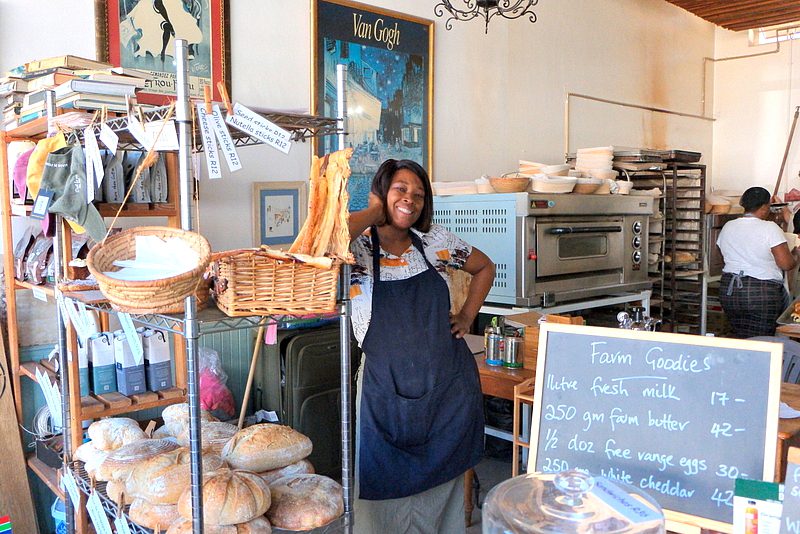
Just one of the friendly staff at C’est La Vie, a well-known bakery on Recreation Road.
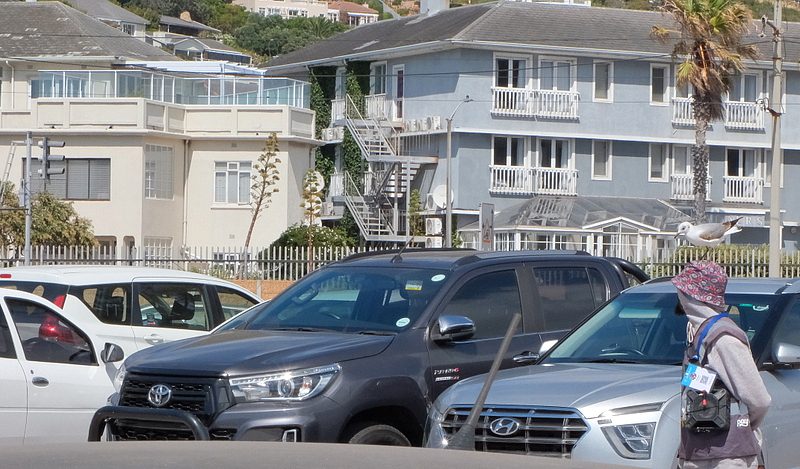 It seemed as if this particular Gull had taken a liking to this car guard. Whenever he moved, the bird would take off and then land on the hat again once the fellow stood still.
I watched for several minutes as it executed several vertical takeoff and landing manoeuvres on the hat.
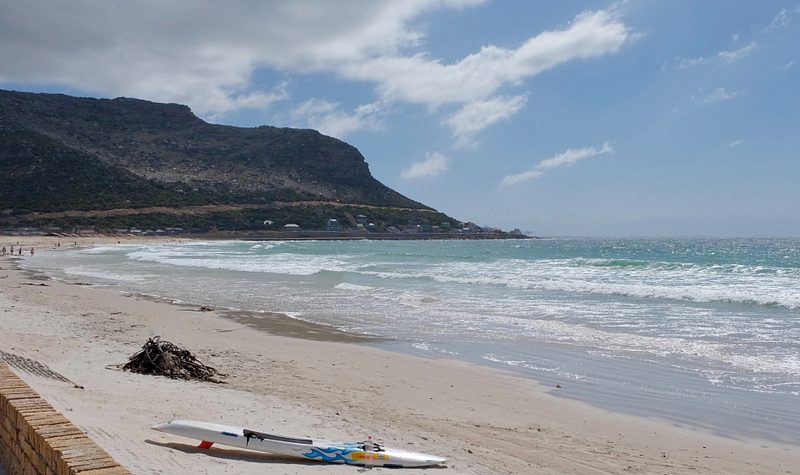
Not a sight I saw often during my week there. This small stretch of beach was busy most days.
Certainly not as busy as the Sea Point side, but it can be during the season…or so I have been told.
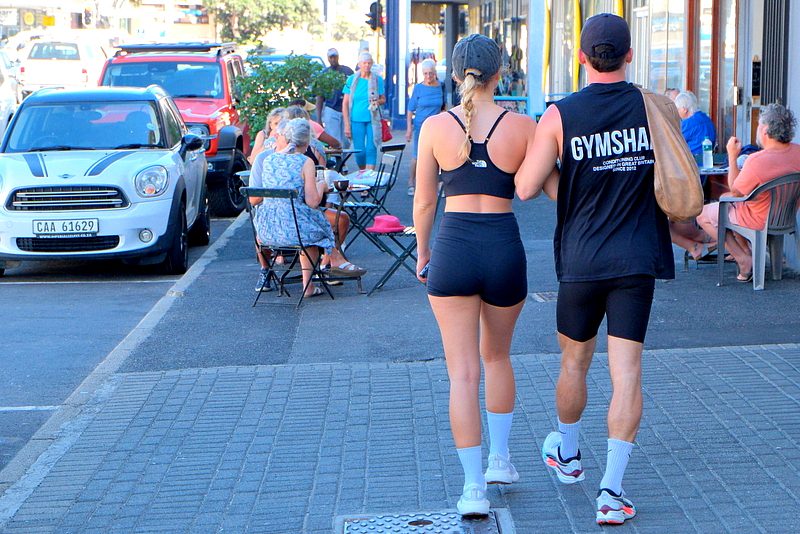
Who needs a suit? For all I know, these might be gym instructors, and this is their corporate attire.
There was a time in South Africa when you could stand on a hill overlooking vineyards heavy with ripening grapes… and still not legally buy a bottle of wine in the town below.
As mentioned earlier, I discovered on my walkabout in Fish Hoek that it had been officially “dry.” for decades.
Doing research, I found that it wasn’t alone.
Up the road, parts of Durbanville — today synonymous with award-winning wine estates — also carried strong restrictions for years. There’s something deliciously ironic about that: vineyards rolling toward the horizon, tasting rooms flourishing, yet historically, a resident couldn’t simply stroll to a corner bottle store. The Dutch Reformed Church held significant sway in many of these communities, and municipal bylaws often reflected a firm belief that sobriety equalled virtue.
Further afield, places like Orania continue to prohibit alcohol sales entirely under their own governance structures. In earlier decades, small towns shaped by missionary zeal or conservative councils quietly voted themselves dry, creating curious pockets of restraint in a country otherwise very fond of a braai and a brandy.
What fascinates me isn’t the restriction itself — it’s the social psychology. A community deciding, collectively, that temptation is best removed rather than resisted. That morality can be legislated by limiting access to a bottle shop. And yet, as history tends to prove, South Africans are nothing if not resourceful. If you couldn’t buy locally, you simply drove over the mountain.
Today, most of these restrictions have softened or disappeared, folded into a more permissive democratic landscape. But the legacy lingers in stories — whispered recollections of “the dry years,” of discreet purchases made elsewhere, of debates in church halls about whether cabernet sauvignon truly threatened civilisation.
It’s a reminder that towns, like people, evolve. Morality shifts. Laws loosen. And sometimes, the very places that once banned the bottle now proudly pour it.
At the end of the day, Fish Hoek is an ideal place to put down roots, whether you are young or have reached retirement age and are looking to downsize and live a simpler, more relaxed lifestyle.


Travel & Things is the proud winner of these prestigious awards from the digital British lifestyle magazine Luxlife.
The awards are in the categories:
Best Travel & Experiences Blog 2024 – South Africa
Best African Game Reserves & Lodges Travel Review Site 2025.
Best African Resorts and Retreats Award 2025.

See who the guests have been since the inception of this YouTube channel.
Click on the logo above.

Looking for something to read? Click on the logo above to visit the Off the Shelf YouTube channel for interesting and up-to-date interviews and book reviews.
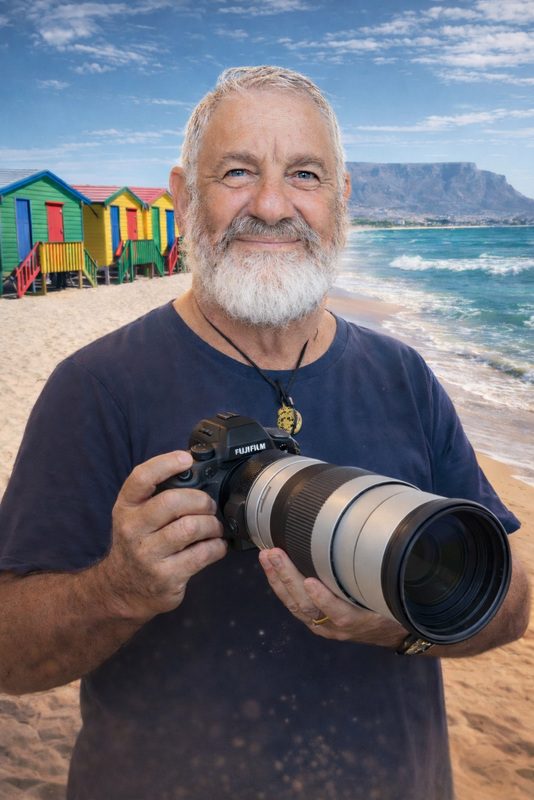
“Hard work never killed anybody, but why take a chance?”
Edgar Bergen
All images are the copyright property of

and may not be used without permission.

All images used in Travel & Things posts are edited using Ribbet software. To learn more about the product and what it offers both amateur and professional photographers, click on the logo above.