








Taking a moment…
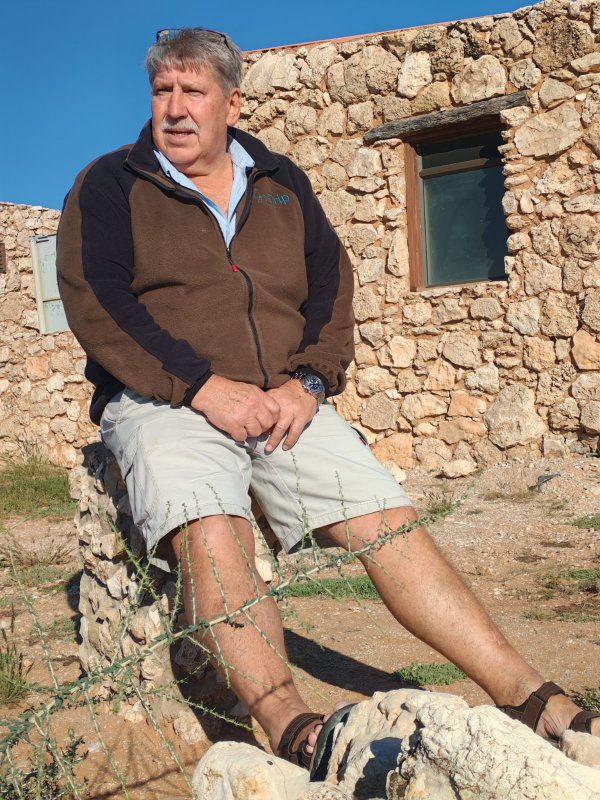
This is Mike, our tour guide. He was more than just a guide. He is a teller of tales, a comedian, a fixer, and more importantly, an all-round nice human being.
He kept his finger on the collective pulse of the group, and at no stage did he have to beg, cajole or force anyone to be on time for either an activity or to get on the coach.
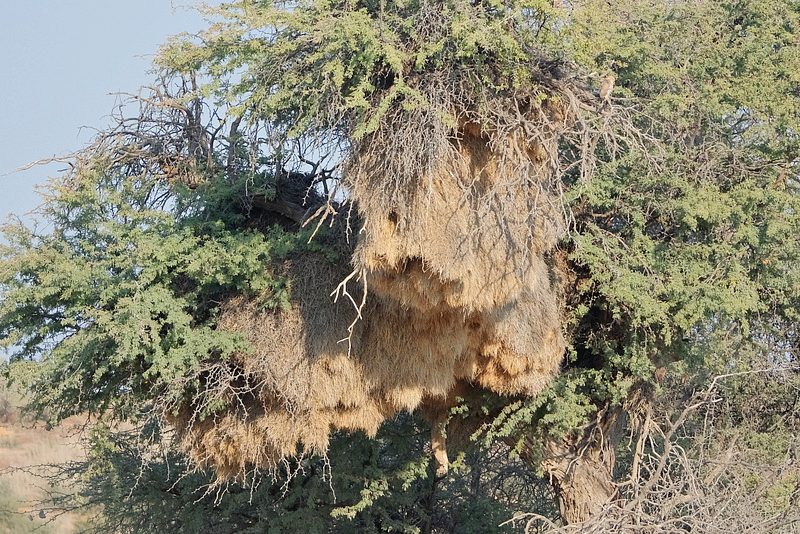
This is one of many Sociable Weaver nests that seem to cling to every tree branch and utility pole in this part of the country.
They are iconic landmarks that seem to be used season after season, getting bigger all the time. Some farmers in the area have reinforced the trees to make certain that the nest and its inhabitants are safe from collapse.
Sociable weavers have clearly never heard the expression “good fences make good neighbours.” Why build a modest little nest when you can construct an enormous communal apartment block in a tree, complete with separate entrances, private chambers and enough architectural complexity to make a quantity surveyor nervous? These remarkable little birds build some of the largest bird nests in the world, with dozens — sometimes hundreds — of birds sharing the structure while maintaining their own individual nesting chambers. The enormous thatched roofs provide shade from the Kalahari heat and insulation against those surprisingly cold desert nights. The community arrangement offers another advantage: there are plenty of neighbours available to sound the alarm when danger arrives. Essentially, the sociable weaver has taken “community living” to its logical extreme. The only thing missing is a body corporate, a levies notice and someone complaining about the parking.
So, is complex living complex? You decide.
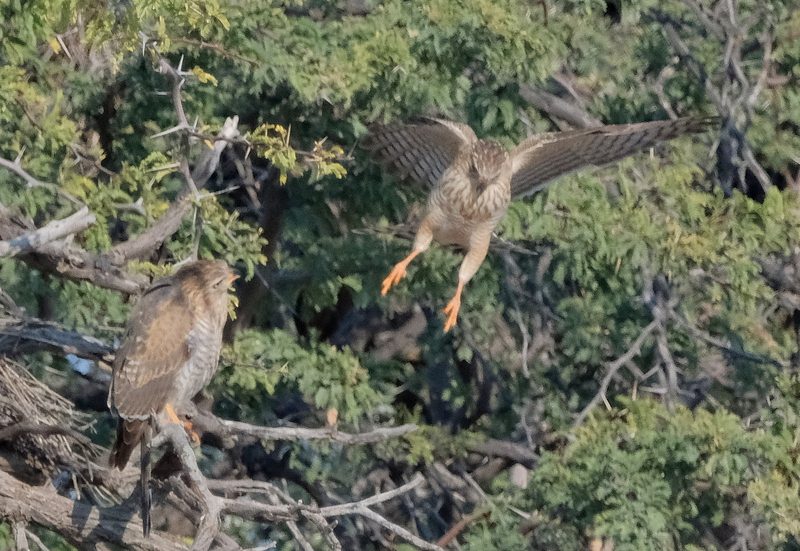
The Gabar Goshawk is a fascinating little raptor, particularly because it doesn’t always behave quite like the fierce bird of prey its hooked bill and talons suggest.
One of its more unusual tricks is its ability to hunt around human habitation, sometimes taking advantage of gardens, farmyards and even the activity created by people. It is also remarkably versatile in its diet, taking small birds, rodents, reptiles, frogs and insects, and it has even been recorded eating termites and other insects, which seems rather like a lion occasionally deciding that a salad would do nicely.
Perhaps the most interesting fact, though, is its dramatic colour variation. Gabar Goshawks occur in both a pale grey form and a much darker, almost black form. The dark birds can look like an entirely different species at first glance.
And the youngsters add yet another layer of confusion, being brown and heavily streaked before acquiring adult plumage.
They are also surprisingly acrobatic. A Gabar Goshawk can pursue small birds through dense vegetation and is capable of turning a thicket into an aerial obstacle course. Small, fast and adaptable, you don’t have to be Africa’s biggest raptor to be an accomplished hunter.
No wonder there was a LOT of discussion on the coach before this species was positively identified.
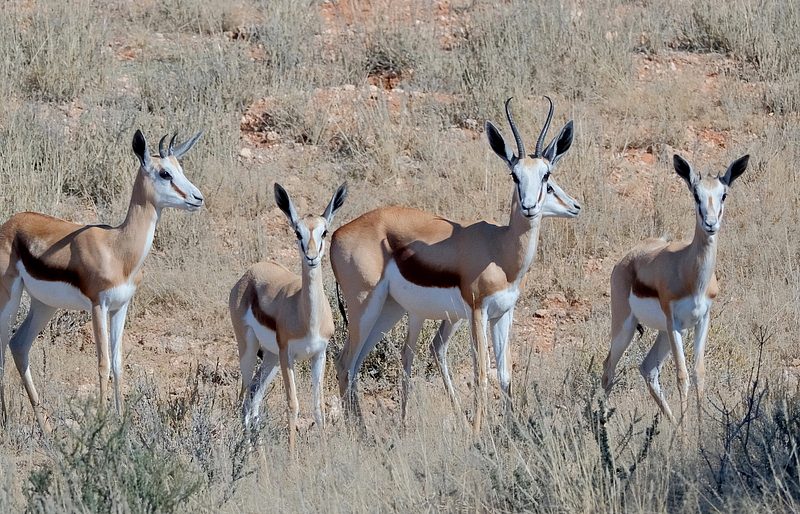
These are the reserves for the National rugby team that did not get a call-up for the recent All Black tour.
Did you know?
This is one of those wonderfully misleading scientific names! The springbok, Antidorcas marsupialis, is not a marsupial like a kangaroo, koala or possum.
The word marsupialis comes from the Latin marsupium, meaning “pouch” or “pocket.” In the springbok’s case, it refers to the skin fold along its back, which can be opened during its famous pronking display. When excited or alarmed, the springbok can arch its back, raise the hairs in this fold and expose a conspicuous white area. Early naturalists apparently thought this unusual skin structure was sufficiently pouch-like to inspire the scientific name.
And here’s the fun bit: there is no baby springbok hiding in there. The lamb is born perfectly capable of running, and its mother certainly doesn’t carry it around in a pouch. So Antidorcas marsupialis is essentially a case of a springbok being given a name that sounds as though it belongs to the wrong branch of the family tree. It’s an antelope with a pocket, not a kangaroo in disguise.
So now you know…
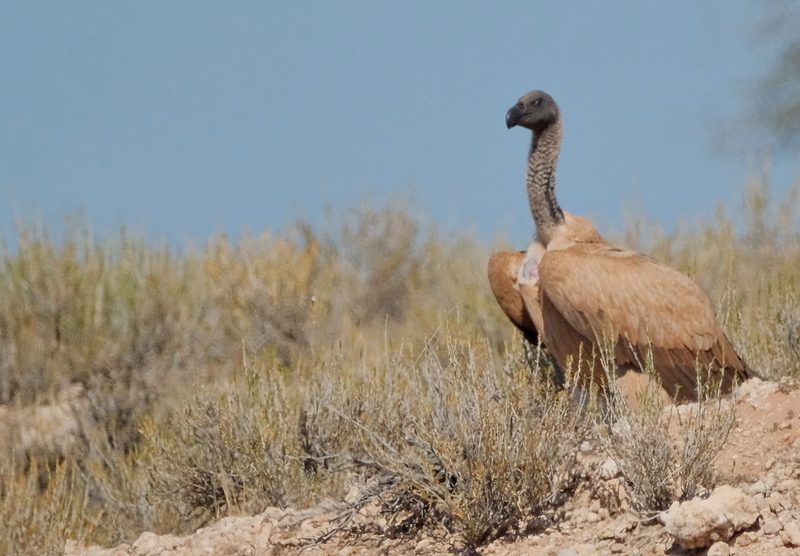
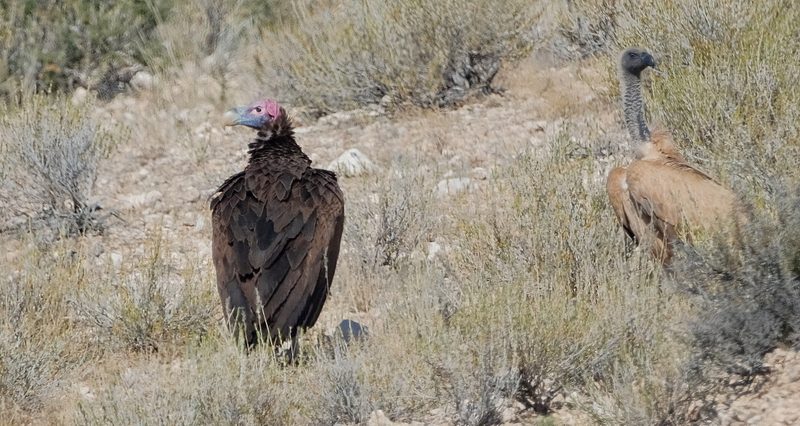
Lappet-faced(L) and Cape Vulture(R)
Where do Lappet-faced vultures fit into the pecking order?
If the carcass were a restaurant, the Lappet-faced Vulture wouldn’t be waiting for the waiter to bring the starter. It would arrive carrying its own can opener.
It is one of Africa’s largest vultures and, thanks to its enormous bill and powerful neck muscles, is capable of doing something many other vultures struggle with: opening up tough skin and tearing through thick hide. Think of it as the carcass’s equivalent of the person who arrives at a picnic with a chainsaw while everyone else has brought teaspoons.
It has the equipment to get the whole process started, and when one walks into the feeding frenzy, the smaller vultures tend to think twice about arguing.
There is also an extraordinary pecking order at a carcass. Larger vultures can dominate the feeding frenzy, while smaller scavengers often wait for an opportunity. Once the larger birds have opened up the carcass, other species can exploit what remains. Eventually, bones, skin and scraps are dealt with by a succession of scavengers and decomposers. It is a remarkably efficient recycling system — and the Cape Vulture is one of its specialists.
And perhaps that is the best way to look at vultures. They aren’t the villains of the African bush; they are the sanitation department. Without them, a dead animal doesn’t simply disappear — it becomes a potential health problem. The vulture arrives, does a thoroughly unpleasant job that nobody else particularly wants, and leaves behind a much cleaner ecosystem. Not glamorous, perhaps, but essential.
The veld would be littered with rotting carcasses if it were not for them and other members of the clean-up crew (jackals. hyena and others)
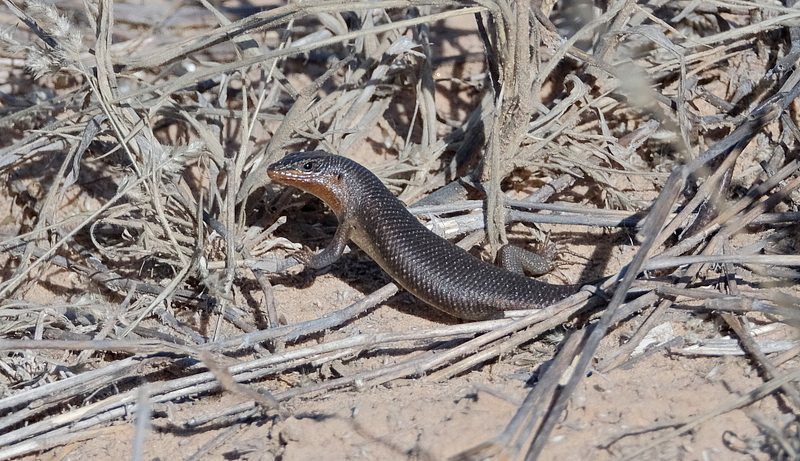
This is a Karasburg Tree Skink.
The dark, almost black back with fine pale speckling, elongated body and orange-brown throat are a very good match. The species is recorded in the Kgalagadi Transfrontier Park and occurs across parts of the Northern Cape, Namibia and south-western Botswana.
What makes it particularly interesting is that, despite being called a tree skink, it isn’t exclusively arboreal. It is described as semi-arboreal, spending time on large trees, particularly those along the dry riverbeds, but also venturing onto the ground to hunt. It is an insect-eater and is usually active during the day.
Fun fact? These skinks have been found living in Sociable Weaver nests. Those enormous communal nests aren’t just impressive bird architecture; they can provide the skinks with shelter and refuge from the Kalahari’s extremes — and potentially from predators that aren’t good climbers.
They can also occur in large colonies, which seems rather sociable for a reptile. So while the Sociable Weavers are busy running their enormous apartment block in the trees, the skinks may effectively be taking advantage of the same real estate.
In the Kalahari, apparently even reptiles understand the advantages of a good address.
So, you see not all interesting creatures have fur, teeth and claws…
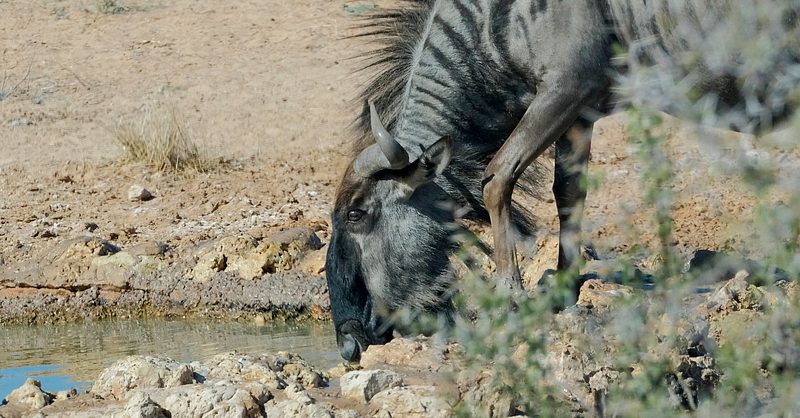
The name “brindled gnu” comes from the unique dark vertical stripes on their shoulders and flanks that give their silvery-grey coat a “brindled” look, while “gnu” describes the loud, nasal “gnuuu-gnuuu” sound they make.
Because of their rugged, muscular build, thick skin, and tough demeanour when cornered or hunted, they have earned the nickname of the “poor man’s buffalo” But that does not put them onto the Big 5 list; however, they are part of the Ugly 5!
The collective noun for this animal is a “confusion”. Most aptly named beast. One runs and the whole herd runs without asking why.
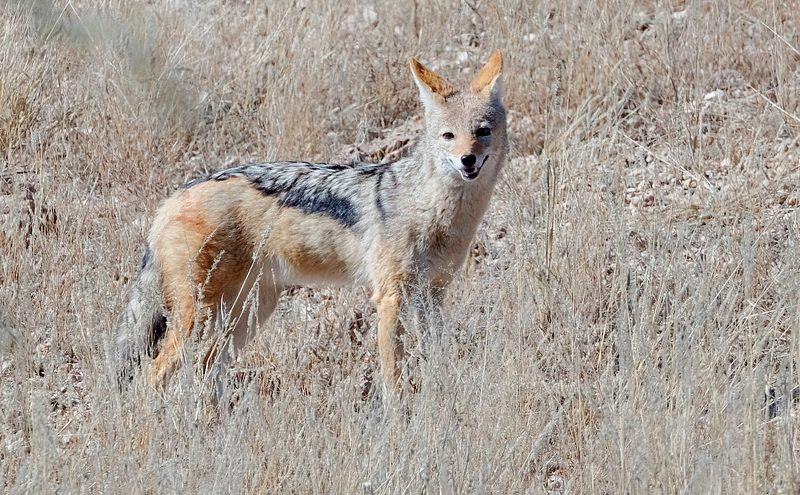
Fossil records show that Black-backed Jackals are one of the oldest known dog species, remaining almost unchanged for 2.5 million years since the Pleistocene epoch
For me, their plaintive cry as night falls is one of the iconic sounds of the African bush.
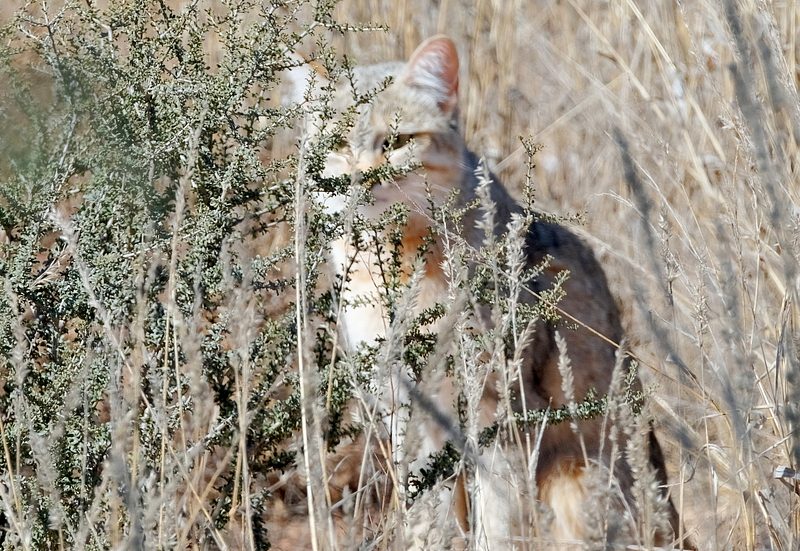
African Wild Cat cannot be domesticated, as they are too feral. Yet their direct descendants are the domestic cats that we know today
Humans first domesticated them in Egypt and the Middle East thousands of years ago to hunt mice and rats.
They resemble a standard striped tabby cat, but feature longer legs and a more upright posture.
A key sign of a pure African wildcat is a distinct reddish or rusty-brown tint on the back of its ears.
Did you know?
They get almost all the moisture they need directly from the prey they eat in hot, dry environments.
An unusual predator sighting: this individual was a short distance from a Cape Fox, yet both seemed relaxed.
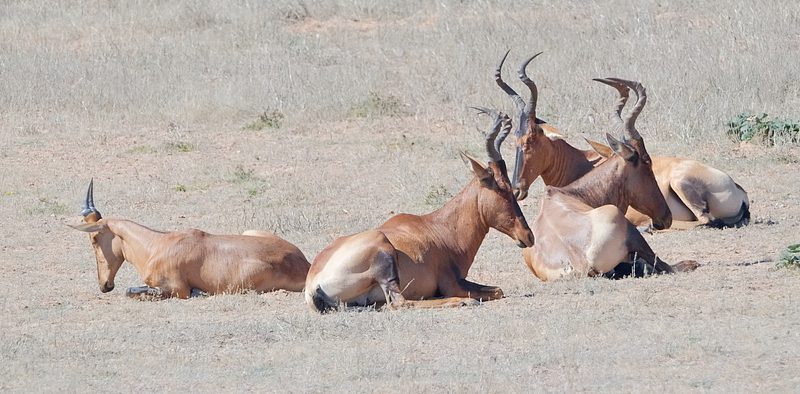
They are built like a sports car: Their hind legs are set higher than their shoulders, creating a backward slope that launches them forward like a track sprinter.
And more importantly, they can maintain 60 kph over long distances. Which makes predator success limited and perhaps, in certain circumstances, not worth pursuing,
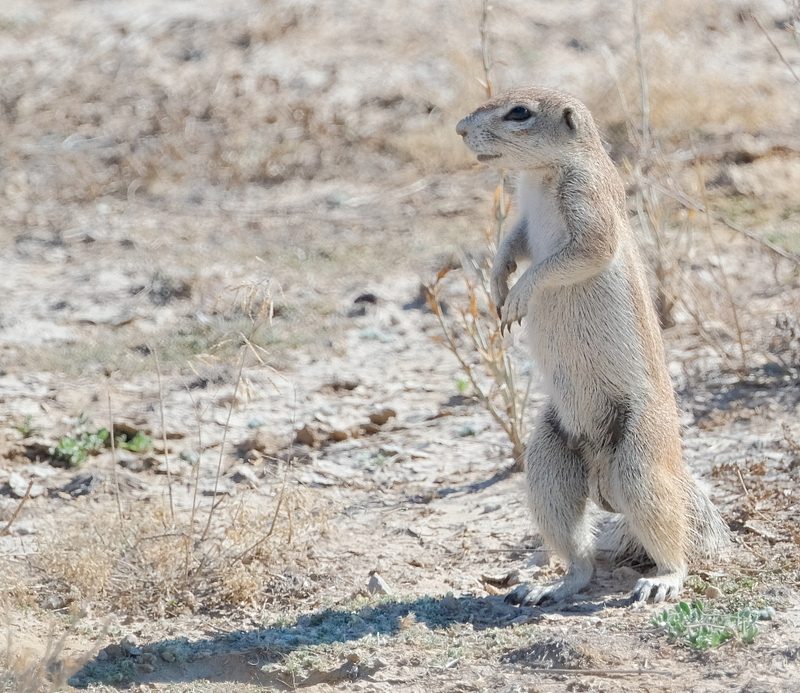
The Ground Squirrel probably boasts the largest ‘cajones’ of any small animal.
Very in-your-face, so to speak.
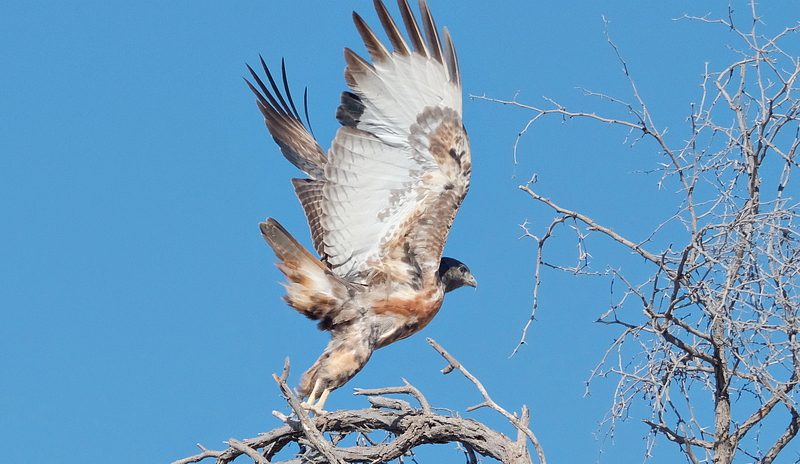
This is a Juvenile Jackal Buzzard.
While the adults have dark red-brown or dark eyes, juveniles have striking, light-colored eyes.
They sport rich brown heads and upperparts with a washed-out rufous-buff or brown underside, often showing lighter buffy or whitish streaking from worn feathers.
Juveniles have noticeably longer tails compared to bulky, short-tailed adults.
They take 2 to 3 years to grow into their striking black, chestnut, and white adult feathers, often passing through a patchy immature phase.
This was yet another bird species that led to lots of head-scratching from those on the coach. Eventually, a birding expert confirmed the species once I had sent him this image.
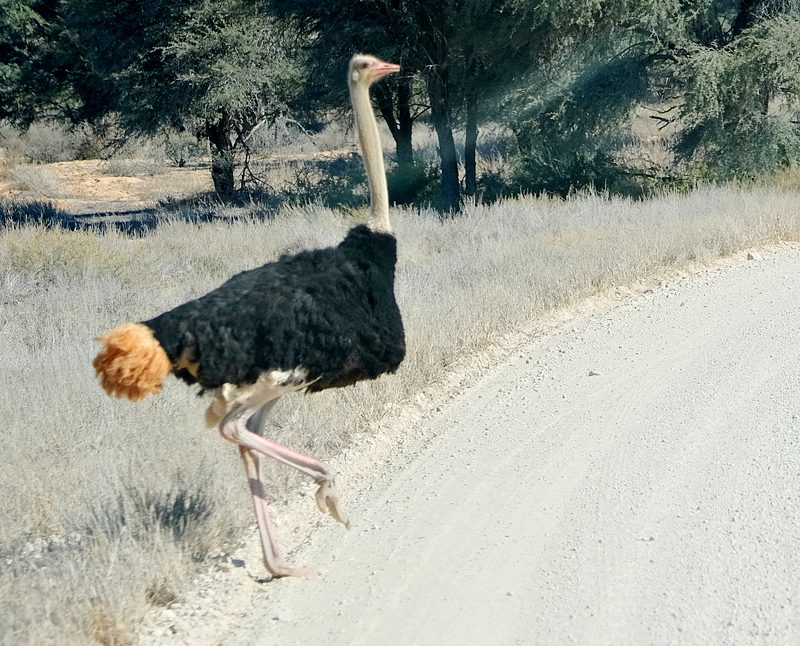
A mobile feather duster?
Nope, just a male Ostrich on the move.
Did you know that every part of an ostrich can be utilised? From their feathers, skin and meat to their feet that are used as tourist ornaments.
 By the light of the moon.
A stunning moon seen in the clear, dark desert sky.
With no ambient light, the night sky is truly spectacular.

To learn more about this company and what they offer, click the logo above.
BREAKING NEWS.
Two new awards for Travel & Things.
I am grateful for them both, but the storytelling award is the one that makes my heart sing.
In all the years that I have been publishing stories, I have strived to make them read like a travel story, rather than just a review of the properties I visit and the wildlife I see.
And it seems that my persistence has paid off.
That being said, the other award is for reviews, so I guess I am doing something right.


Travel & Things is the proud winner of these prestigious awards from the digital British lifestyle magazine Luxlife.
The awards are in the categories:
Best Travel & Experiences Blog 2024 – South Africa
Best African Game Reserves & Lodges Travel Review Site 2025.
Best African Resorts and Retreats Award 2025.
Most engaging Travel & Lifestyle Blog 2026.
And now I can add:
Best Luxury & Safari Travel Review Platform 2026
Authentic Storytelling Excellence Award 2026

To see who the guests have been since this YouTube channel launched, click on the logo above.

Looking for something to read? Click on the logo above to visit the Off the Shelf YouTube channel for interesting and up-to-date interviews and book reviews.

“Hard work never killed anybody, but why take a chance?”
Edgar Bergen
All images are the copyright property of

and may not be used without permission.

All images used in Travel & Things posts are edited using Ribbet software. To learn more about the product and what it offers both amateur and professional photographers, click on the logo above.