






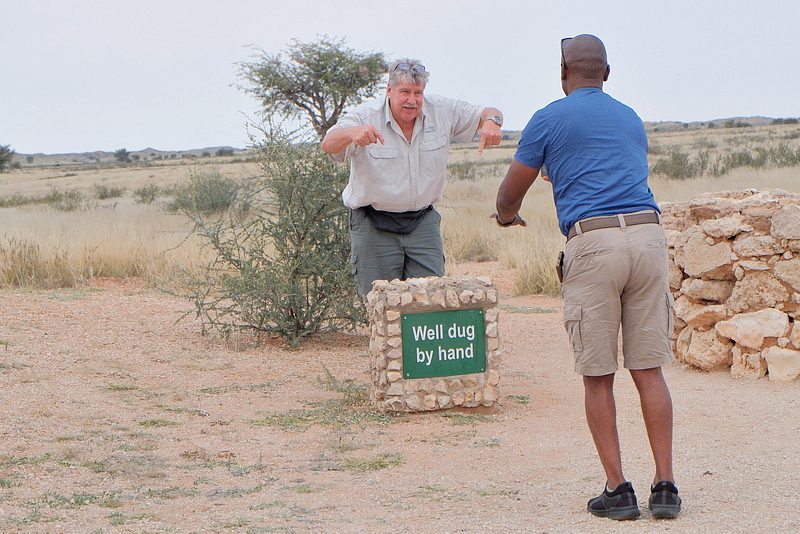
Perhaps Mike and Bennett are playing some ritual game that we knew nothing about?
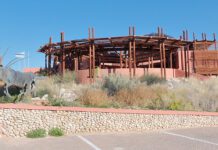
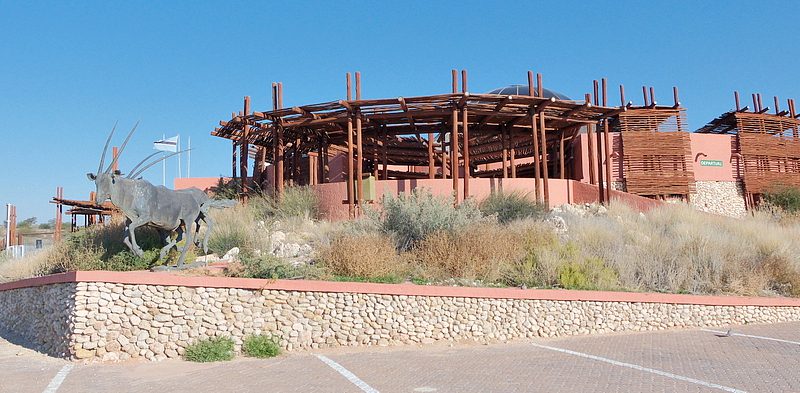
But we DID discover 3 Barn Owls living in a disused well to the right in this image.
Getting to see them did involve hanging over the well wall and peering into the inky darkness. But it was worth the feeling of vertigo.
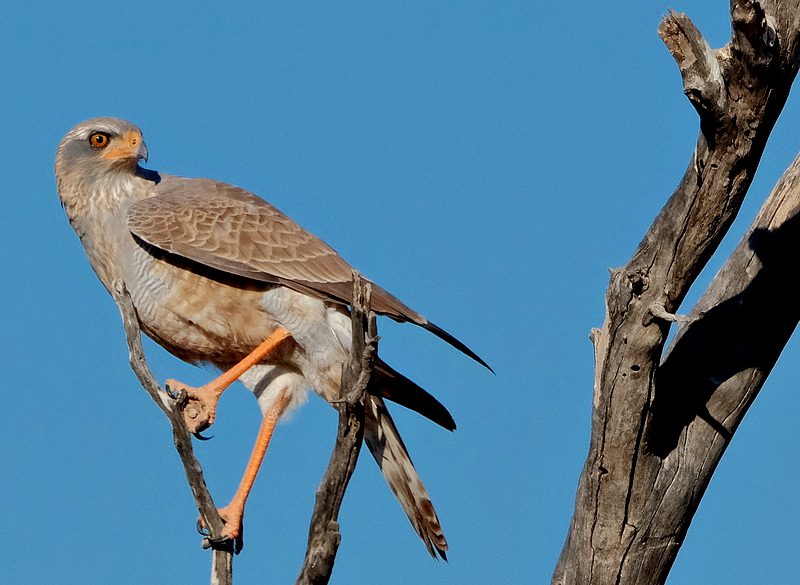
The Pale Chanting Goshawk may look as though it spends its day sitting quietly and minding its own business. But scratch beneath the feathers and you discover a bird that knows exactly where to sit, whom to follow and when to start a fight.
The bird looks like its legs belong to a different species…
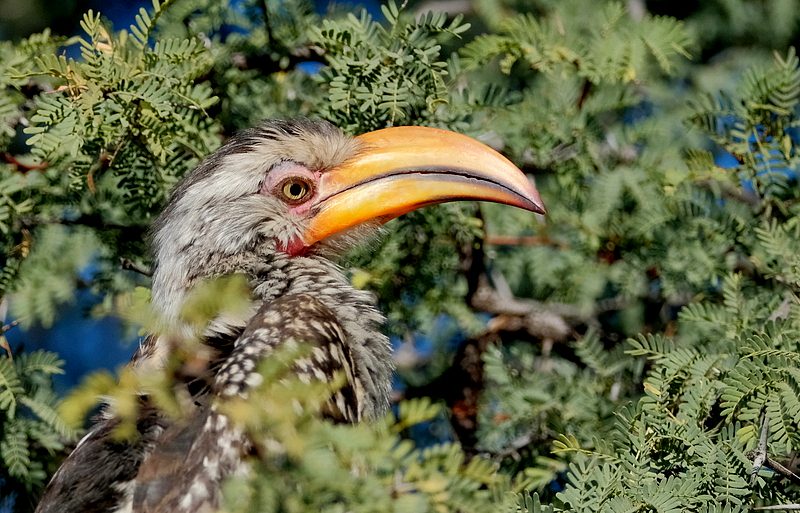
Yellow-billed Hornbill…also known as the banana bird, for obvious reasons.
Disney has to be held accountable when it comes to renaming various species post The Lion King.
This is officially a Yellow-billed Hornbill, but thanks to the franchise, it is now also called Zazu by both guests and guides alike.
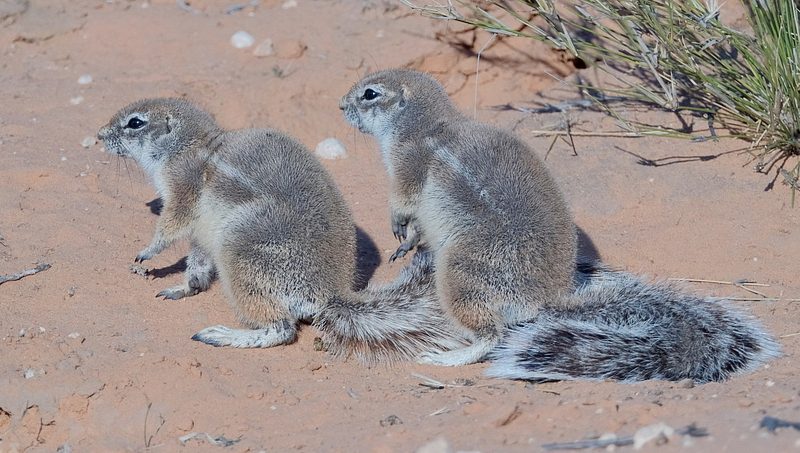
The Cape ground squirrel has perfected the art of Kalahari living: eat breakfast, sit in the shade, keep one eye on the sky, and when the temperature becomes ridiculous, disappear down a hole. Frankly, on some African summer afternoons, that sounds like a very sensible lifestyle choice.
Did you know that these squirrels have a built-in umbrella. That enormous fluffy tail can be held over its back and head while the squirrel is standing in the hot sun.
However, research suggests the tail isn’t actually a sophisticated air-conditioning system as once thought; the squirrel also regularly retreats underground to dump excess heat.
Now you do!
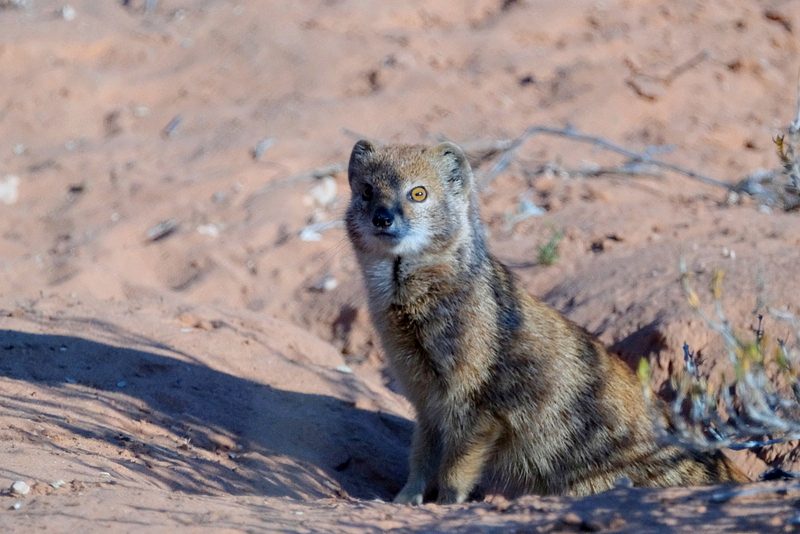
The Yellow Mongoose is proof that you don’t need to be big, scary or equipped with impressive horns to make a living in the African bush. Give it a burrow, a pair of digging claws and a willingness to eat almost anything, and it seems perfectly happy to let the lions have the publicity.
It seems to me that the mongoose has similar pupils to those of a goat?
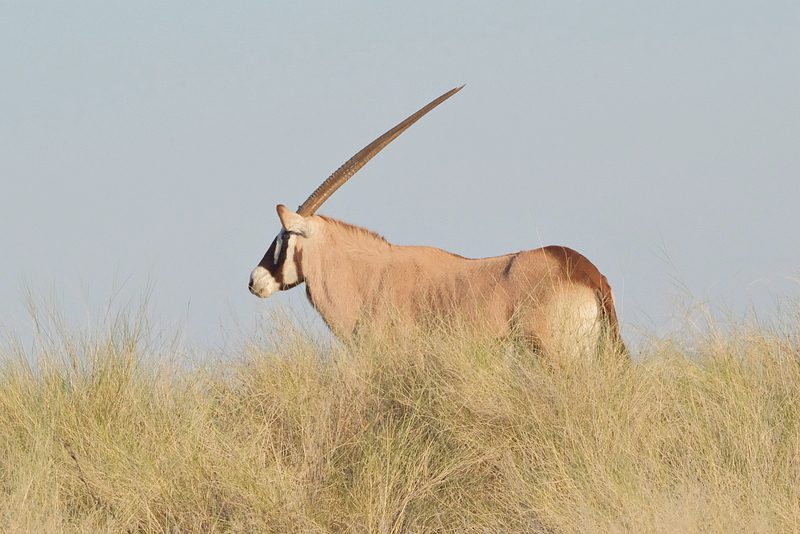
This is my best side…
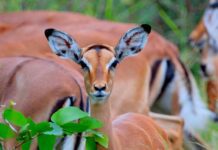
A Gemsbok posing for a close-up
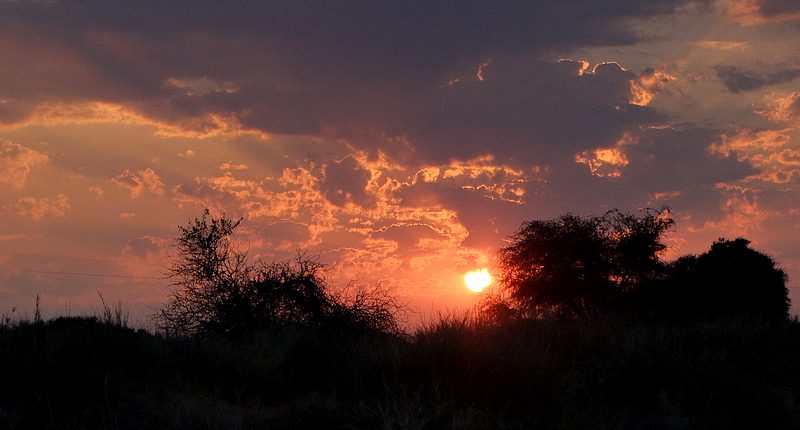
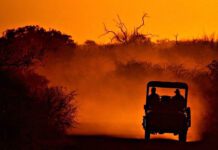
Desert sunsets ended off the marvellous days that we spent in the park.
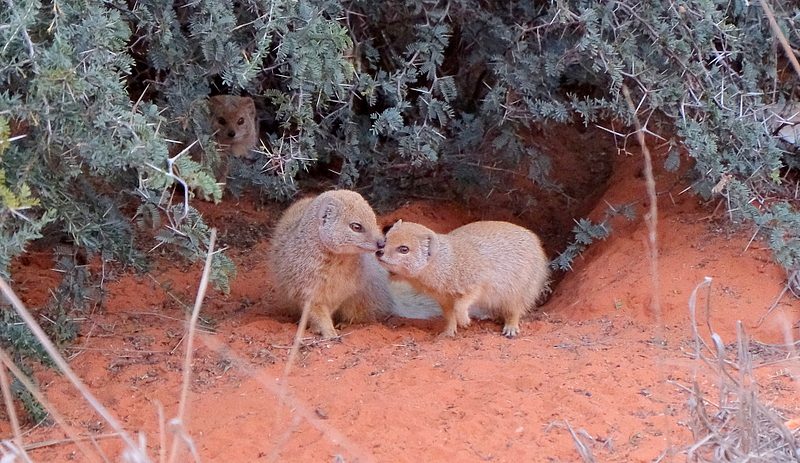
A pair of mongoose, or should that be mongeese? Or perhaps even mongooses?
I am always uncertain as to what the correct plural for this species is.
So, as one does, I asked ChatGPT. And quick as a flash, this was the response.
One mongoose
Two mongooses
A family of mongooses
You will occasionally see mongeese, but that is generally considered humorous rather than the standard plural.
A group of mongooses is perfectly correct, although you can use ‘a mob’ or ‘business’ of mongooses.
And now you know!
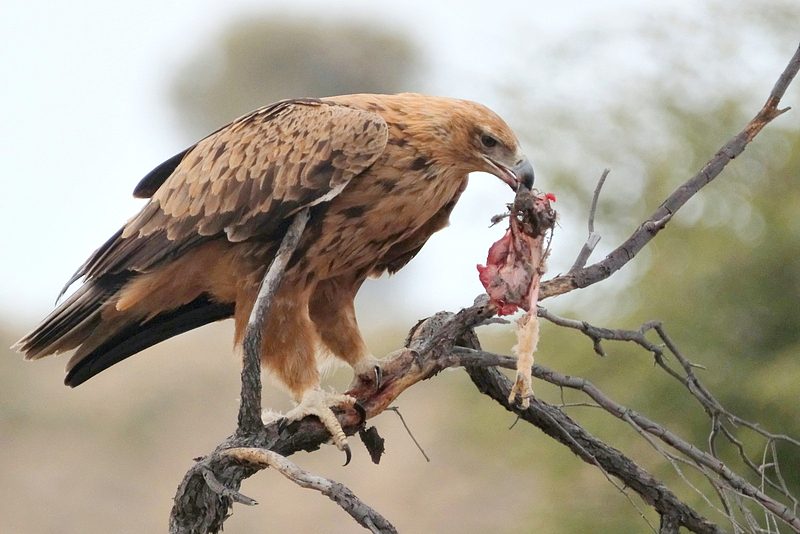
Tawny Eagle with the remains of an owl.
I sent this image to a birding friend of mine and asked him to identify the prey.
Unfortunately, aside from telling me the remains were that of an owl, he was unable to definitively identify the species.
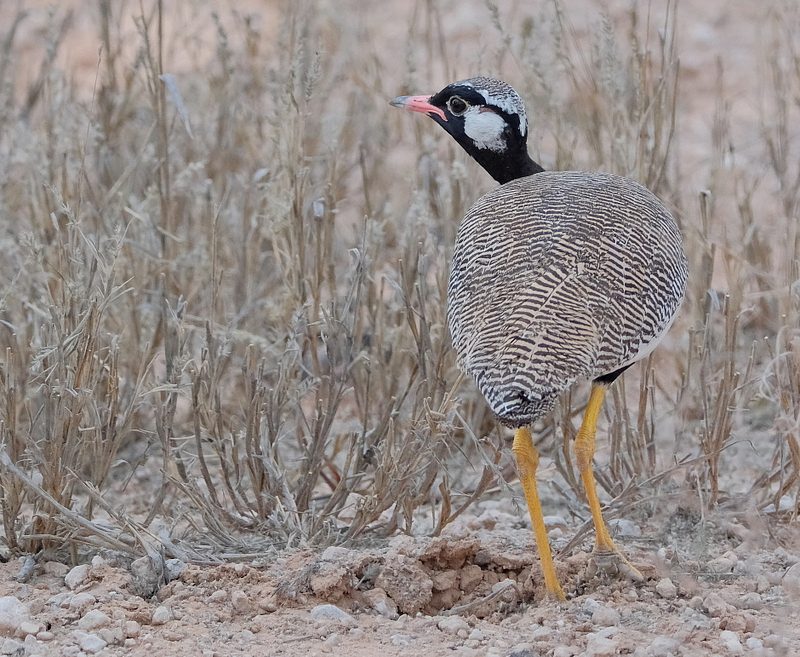
Northern Black Korhaan.
During breeding season, the males don’t just call—they launch themself into the air like a feathered surface-to-air missile, fluttering high into the sky while screaming in a loud, raspy “crack-crack-crack-rack-rack” call at full volume.
He then plummets back to earth like a bungee jumper whose cord has snapped, pulling up just before he hits the ground. All this is done to impress females in the vicinity into mating with him.
Failure is NOT an option.
And for that reason, it is also known as the Suicide Bird!
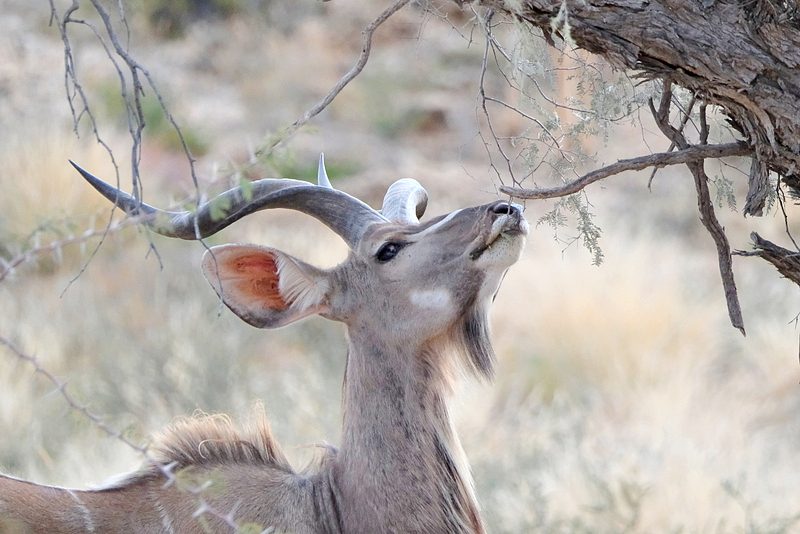
A Kudu doing what Kudu do…eat!
Did you know that you can tell the age of the male Kudu by the twists in the horns?
This individual is probably under 2 years old.
Kudu are also known as the Grey Ghosts because of their ability to vanish into the vegetation, almost invisibly.
Their large horns can be laid almost flat along their backs to prevent them from getting entangled in the branches.
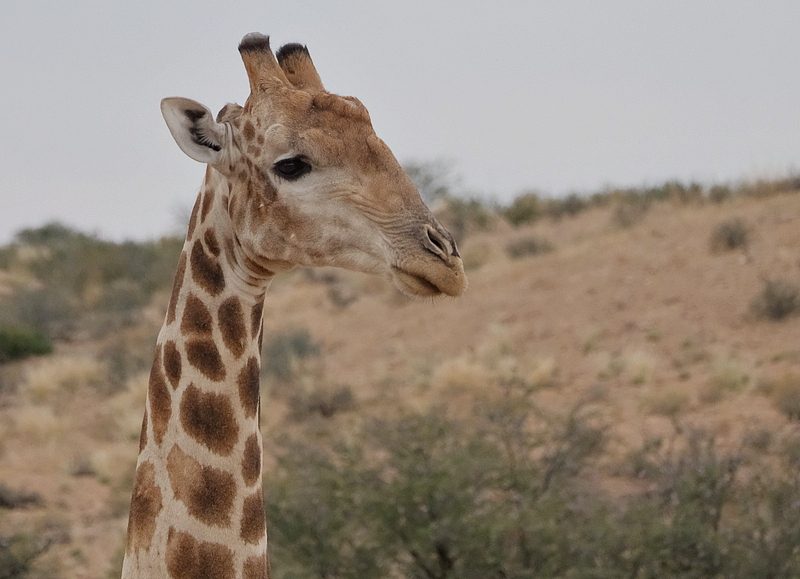
The tallest animal on the planet, unless you can get a Blue whale to stand on its tail!
That being said, a giraffe is 18m, while a Blue Whale is 33m…
The tallest known dinosaur was likely a Sauroposeidon, which could reach an estimated height of 16- 18 m with its neck extended. Roughly the same as a giraffe.
So it seems that the Blue Whale wins hands down. Luckily, it lives in the ocean.
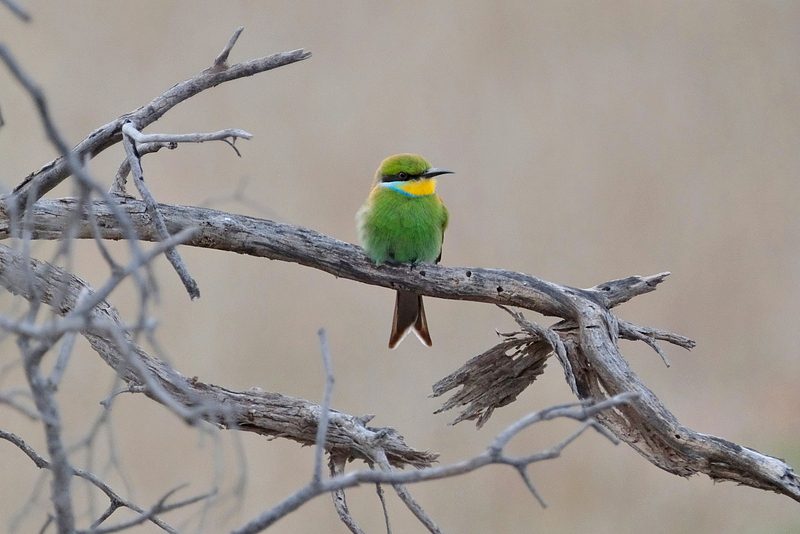
Swallow-tailed Bee-eater.
One of 9 Bee-eater species found in South Africa.
The most common being the Little Bee-eater.
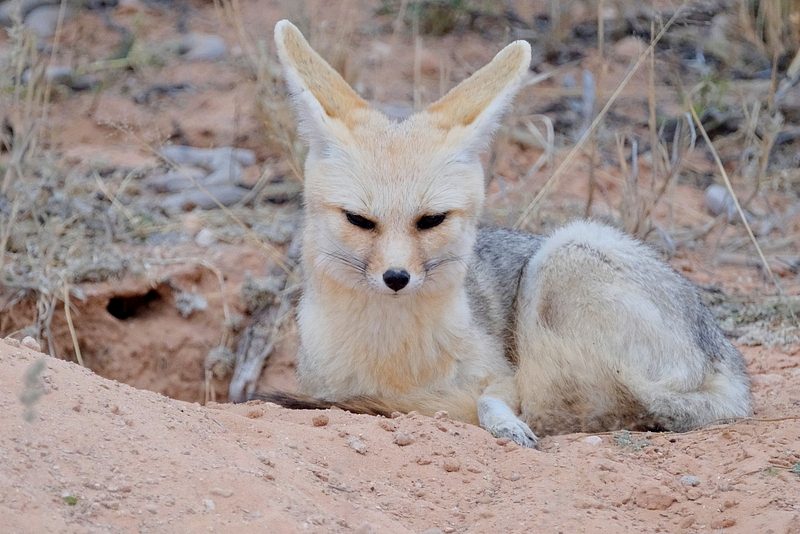
Cape Fox… I didn’t even know this was a species!
But living as I did, in Gauteng and visiting reserves and lodges in the Lowveld, the clue should have been in the name.
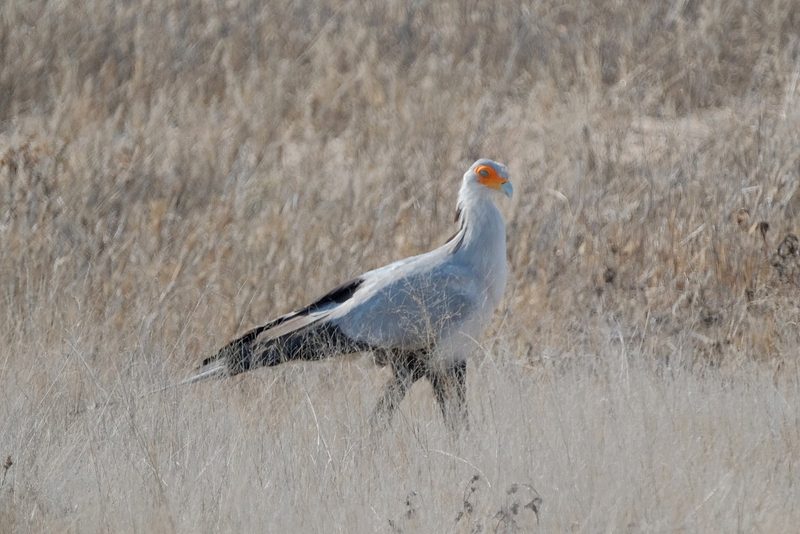
Secretarybirds kill prey, especially venomous snakes like cobras and puff adders by stomping on them.
A single kick delivers a force equal to roughly five times its own body weight in a fraction of a second (about 15 milliseconds), leaving snakes no time to react.
As an aside, it appears on the South African Coat of Arms and signifies protection, vigilance, and the destruction of enemies.
It is opined that the name comes from the head feathers that look like old-fashioned writing quills.
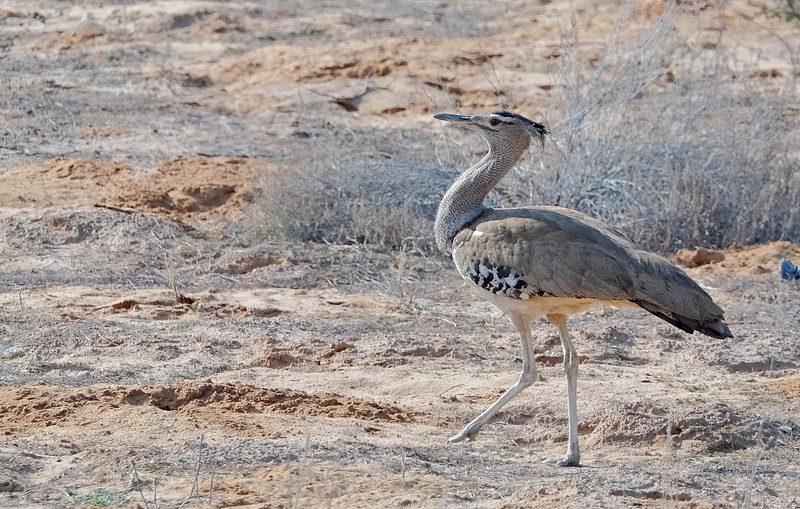
The Kori Bustard is basically an ostrich that went to finishing school. It is almost as tall as a small person, weighs as much as a Labrador, has a wingspan approaching three metres, and yet it wanders around the Kalahari eating grasshoppers as though this is perfectly normal behaviour for a bird that size.
Then, when necessary, it is able to fly.
There is a Guinness World Records entry for an 18.14 kg Kori Bustard recorded in South Africa in 1936.
Hence the accolade of being called the heaviest flying bird.
And we saw a LOT of them.
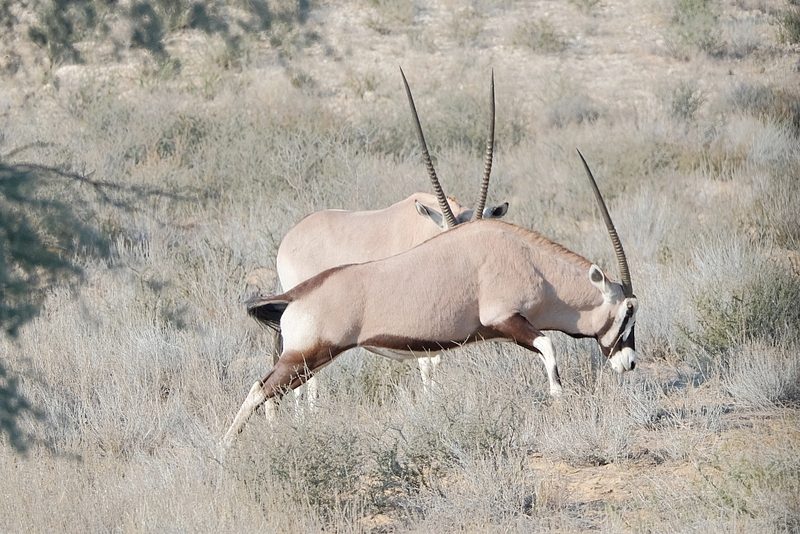
A Gemsbok battle. But this was just a fun joust, and not life-threatening.
Our time in the Kgalagadi was too short and over too quickly.
But it does give us a reason to return.

To learn more about this company and what they offer, click the logo above.
BREAKING NEWS.
Two new awards for Travel & Things.
I am grateful for them both, but the storytelling award is the one that makes my heart sing.
In all the years that I have been publishing stories, I have strived to make them read like a travel story, rather than just a review of the properties I visit and the wildlife I see.
And it seems that my persistence has paid off.
That being said, the other award is for reviews, so I guess I am doing something right.
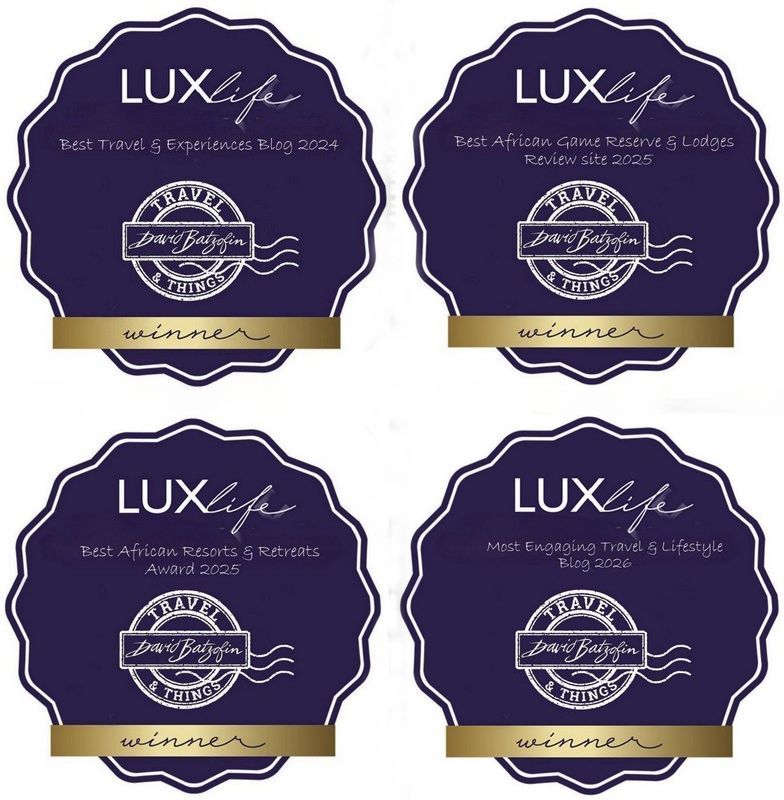
Travel & Things is the proud winner of these prestigious awards from the digital British lifestyle magazine Luxlife.
The awards are in the categories:
Best Travel & Experiences Blog 2024 – South Africa
Best African Game Reserves & Lodges Travel Review Site 2025.
Best African Resorts and Retreats Award 2025.
Most engaging Travel & Lifestyle Blog 2026.
And now I can add:
Best Luxury & Safari Travel Review Platform 2026
Authentic Storytelling Excellence Award 2026
To see who the guests have been since this YouTube channel launched, click on the logo above.

Looking for something to read? Click on the logo above to visit the Off the Shelf YouTube channel for interesting and up-to-date interviews and book reviews.

“Hard work never killed anybody, but why take a chance?”
Edgar Bergen
All images are the copyright property of

and may not be used without permission.

All images used in Travel & Things posts are edited using Ribbet software. To learn more about the product and what it offers both amateur and professional photographers, click on the logo above.