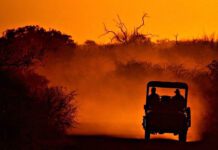




Before the rains came…
I get to spend time with one of the WildEarth TV teams do enable viewers to get a behind-the-scenes look at what occurs behind the camera.
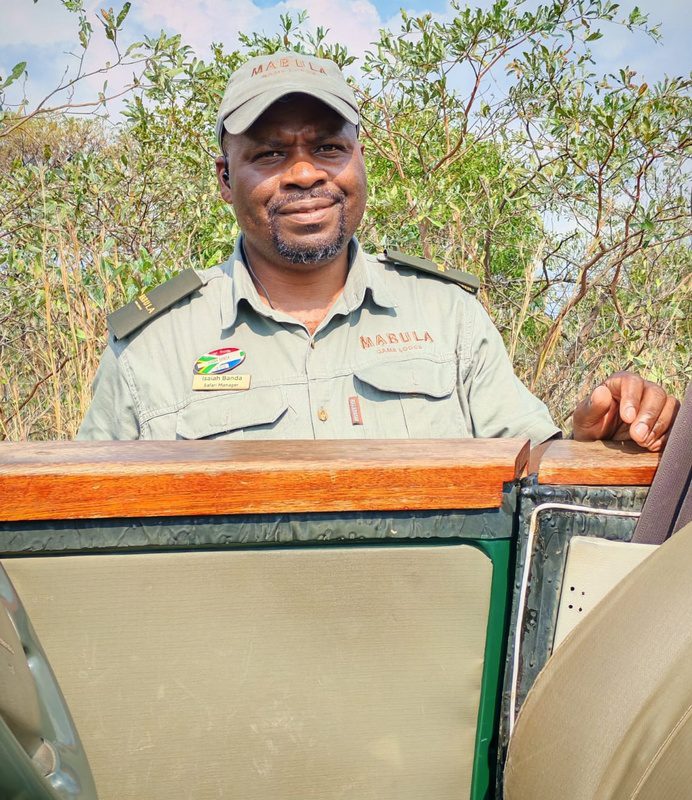
Viewers get to see broadcasters like Isaiah Banda and their surroundings. However, a lot is going on behind the camera that they don’t get to see.
So, spending a couple of days at Mabula enabled me to show readers what goes on behind the front seat.
I was not so much a backseat driver as a back seat observer.
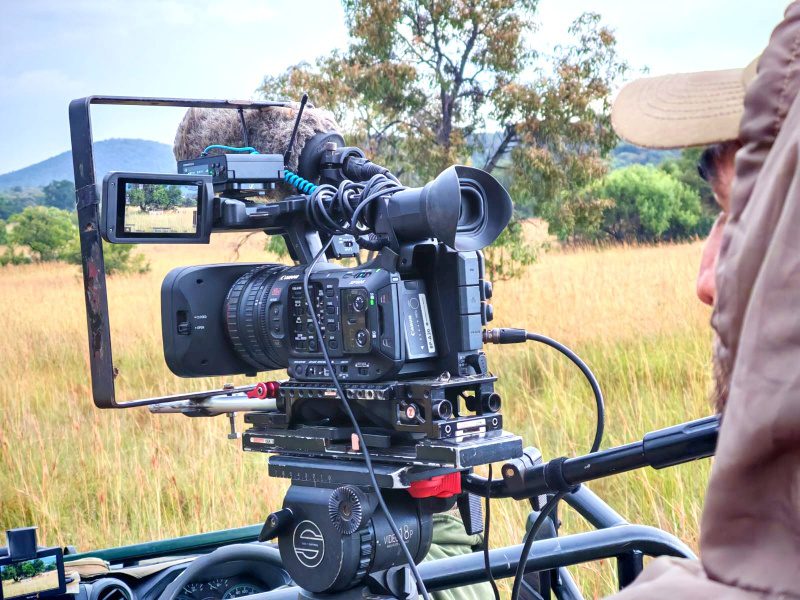
Not only is Cam the cameraman, but he is also the link with final control back in Rivonia, Johannesburg.
He is there to feed info about sightings to them, and in return, they inform him when they will cross live to his vehicle.
This information has to be fed to Isaiah in order for him to prep for the upcoming link.
And I have to tell you that trying to fill 3 hours of content is not as simple as it looks.
During this drive, the weather was against us, and as a result, we spent a large part of our “air time” trying to keep out of the downpour. Luckily, the other presenters were having more luck with both the weather and sightings, and they were therefore able to make certain that there was a constant stream of interesting content being aired.
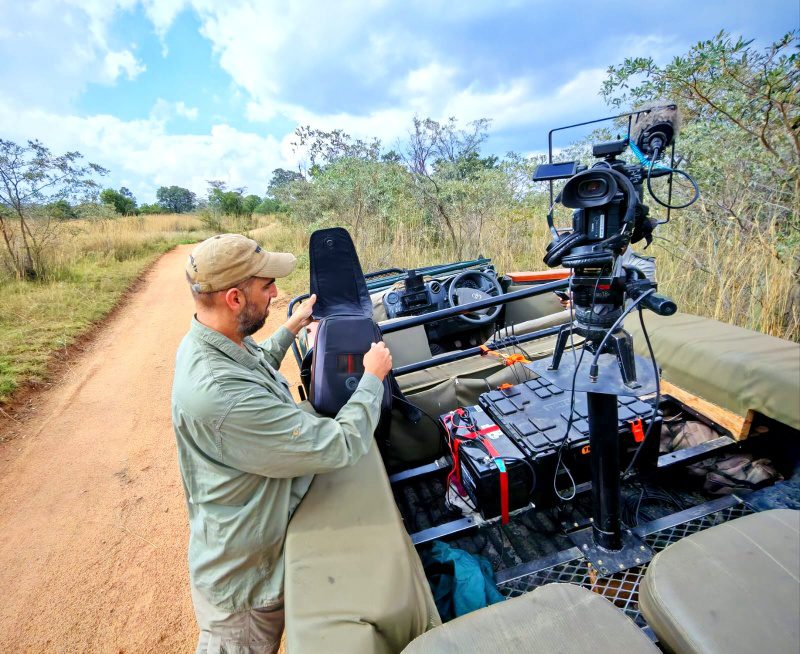
This is singularly the tallest human I have ever met! At 2,04m (6’8″in Imperial terms), Cameron Clements was the cameraman as well as the connection with final control.
“Call me Cam,” was how he introduced himself as he towered over me. I was going to ask him if “Cam” was short for anything, but given the situation at the time, I felt that it was inappropriate. Once I had spent a couple of drives with him, I did raise the question.
The earlier incarnations of vehicles used in programs like this were small and cramped, with barely room for the broadcaster and a cameraman.
I had been an observer on one of those, and therefore I was expecting to have to curl myself into the shape of a pangolin to get into the vehicle.
That was not the case, and, as it turned out, I had an entire back row to myself, which was a pleasure.
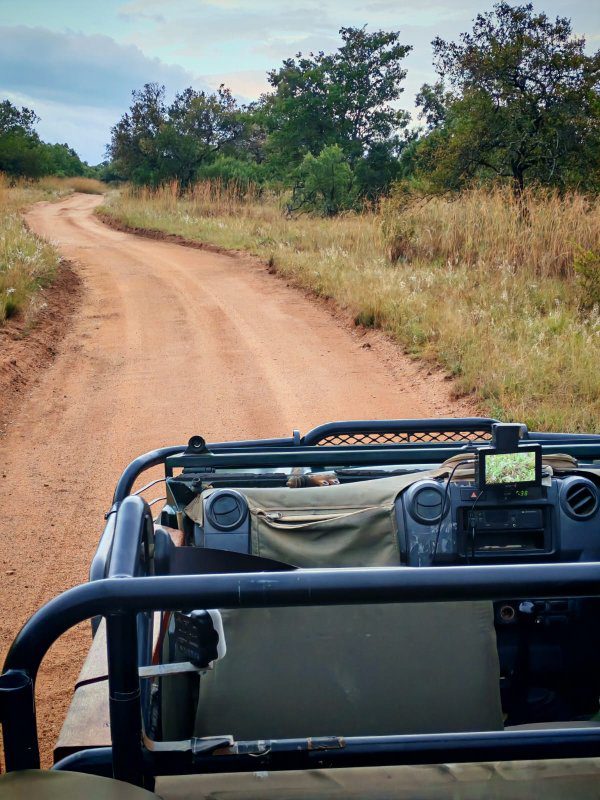
As we headed out in order for Isaiah to locate a spot to do his opening link, both the road ahead and the sky above were clear.
Not quite blue skies, but we were hoping that both the clouds and the rain would bypass the Reserve.
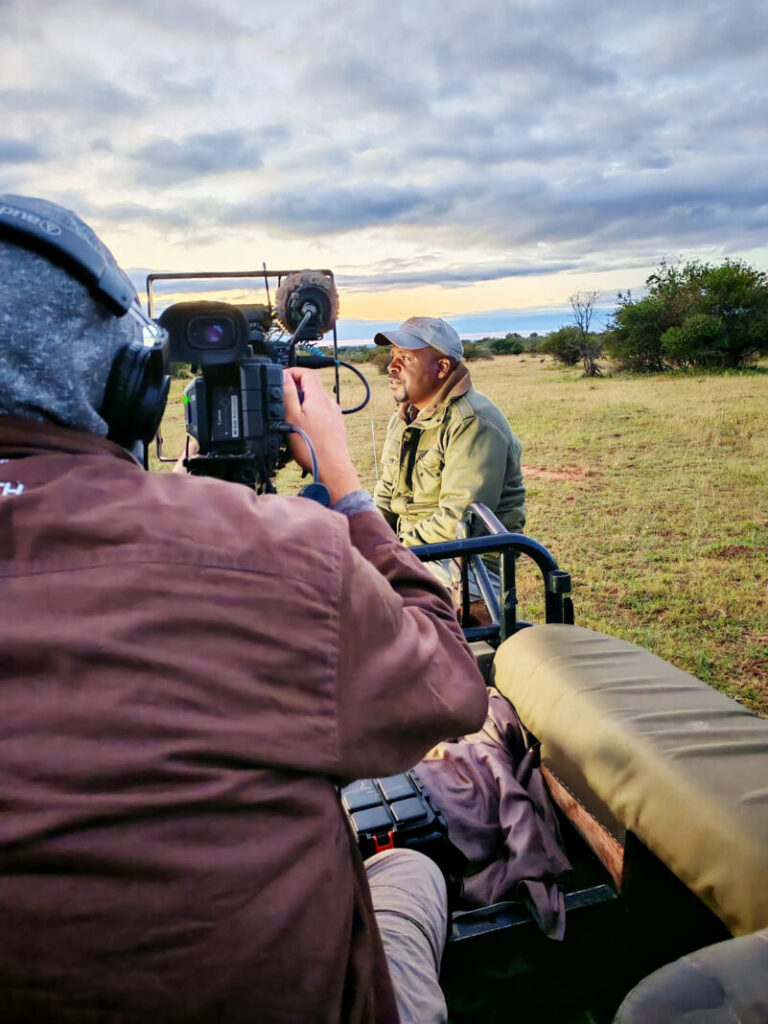
Seated behind the camera, Cam does not seem that tall.
In front of the camera was Isaiah Banda, who was the host/ broadcaster/guide for the drives on which I was a silent member.
He was named Top National Guide (Guide of the Year) in 2015. He was the runner-up in 2016 and was voted the best Guide in Limpopo in 2017
These accolades placed him among the top-tier guides in South Africa during that period.
He represents a particular kind of guide that’s becoming increasingly important:
Deeply knowledgeable in the field
Passionate about conservation and education
Able to connect people emotionally to the bush
And perhaps most importantly—someone who understands that guiding isn’t just about sightings, but about storytelling, interpretation, and creating lasting memories.
I have known Isaiah since my first visit to Mabula several years ago. His style of bush knowledge always allows me to learn something new every time I am with him.
And these drives with WildEarth were no exception.
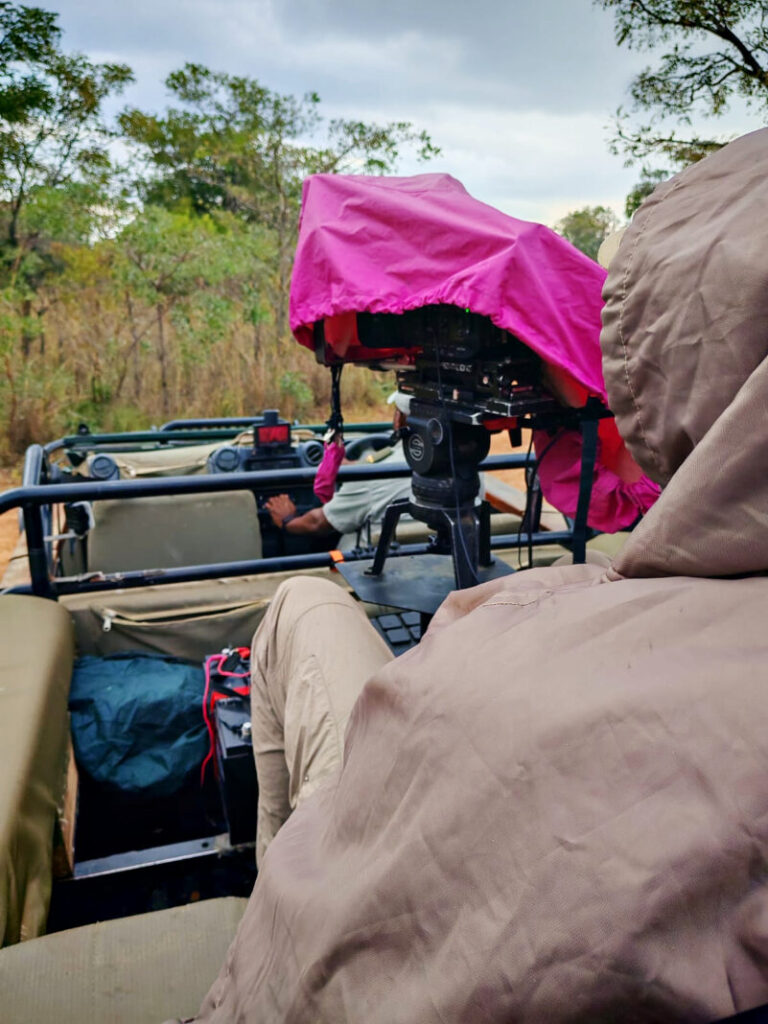
Like all live TV programs, WildEarth is no different. What the audience gets to see and what those on the vehicle get to experience are totally different.
For one, the drive time is split between several properties in different parts of Africa. This means that you are not ‘live’ all the time, especially if there are only trees blowing in the breeze where your vehicle is.
But all the vehicles have to be alert and ready to go on air if they spot something. Therefore, they cannot just drive out of a camp, do an opening link and then park off in the shade of a tree to wait out the rest of their time on air.
And of course, if the weather does not play along, the animals tend to seek shelter, as did the camera team.
In our case, Cam was able to get both himself and his camera under cover before the rain bucketed down.
Luckily for all three of us, Isaiah was able to get us undercover at the main camp until the storm had passed.
We had to hunker down in a leaky carport for the majority of the designated 3-hour drive before heading out again.
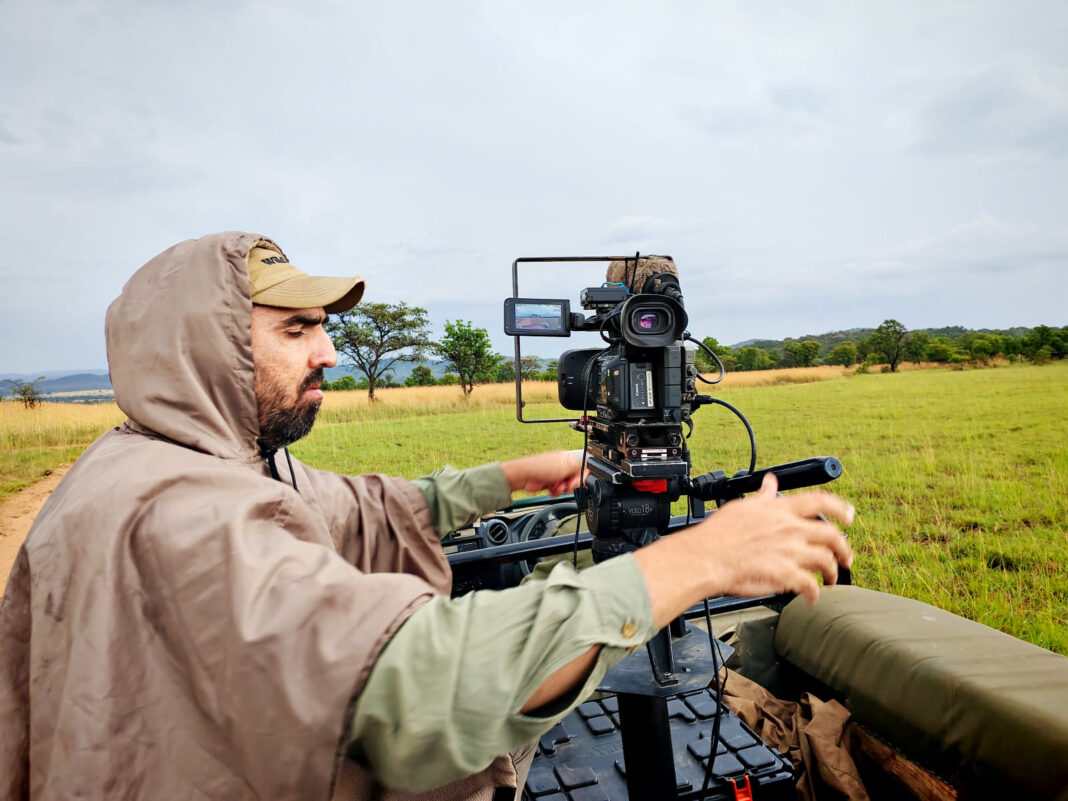
Cam is not looking too happy with the situation. But the adage with all live TV presentations is, “The show must go on“, so on we went.
Luckily, although damp, we were not cold.
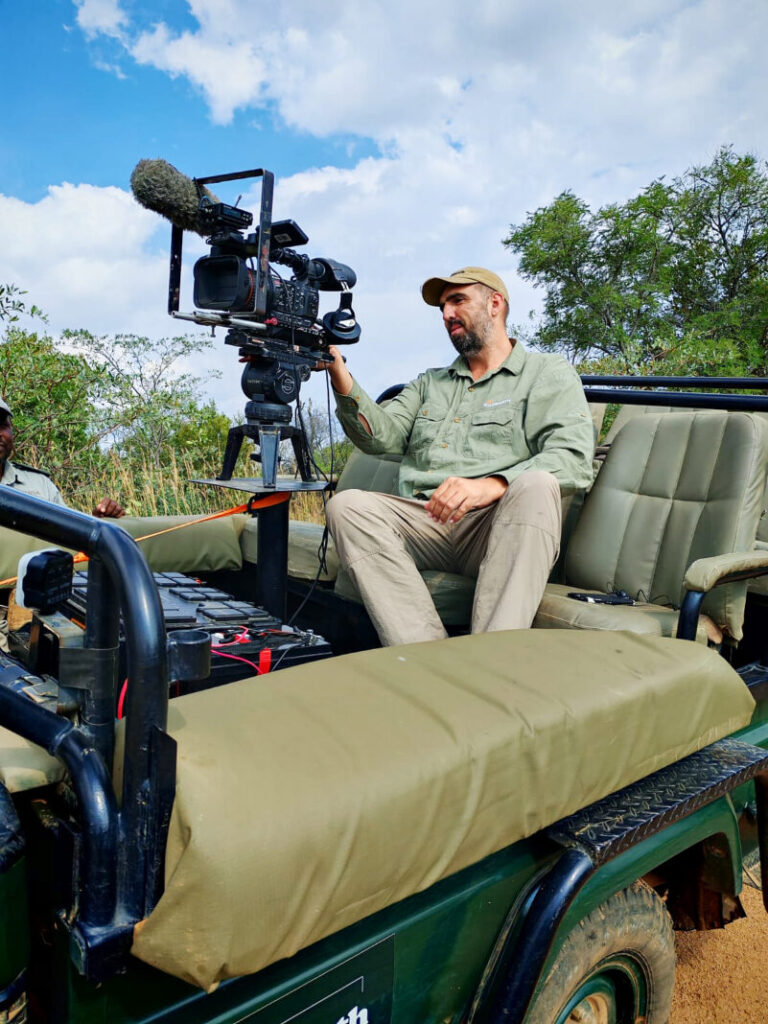
The sun started to peek out from behind the clouds, and off came the ponchos and the covering for the camera.
Now, all that was needed were some animals to build a narrative around.
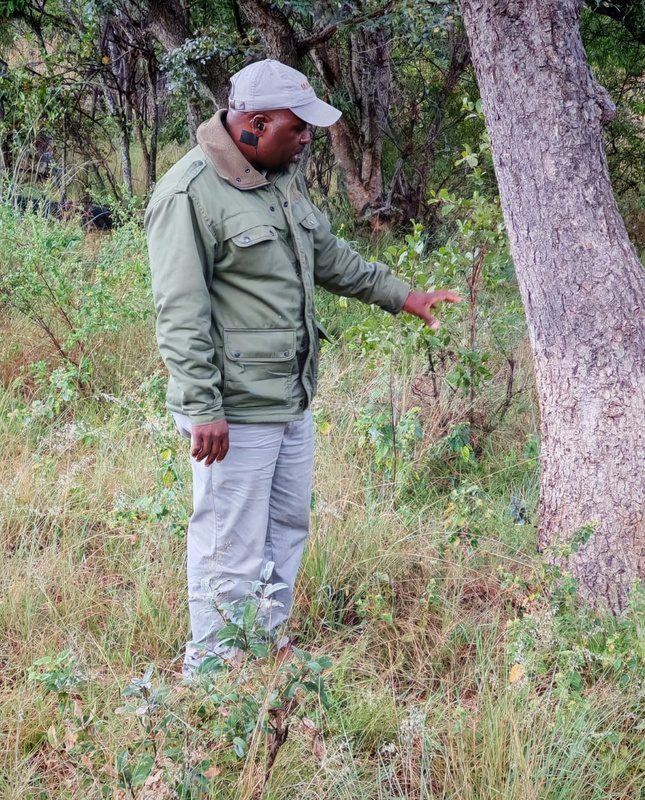
While the team were hoping for animals, Isaiah and Cam jumped off the vehicle in order for this to be turned into a learning experience.
In this instance, it was to show viewers how cheetah urine could change the colour of the bark on the lower part of this tree. Male cheetah, like many other species, use scent marking to set territory boundaries.
The urine also warns males as to who is in the area and what their position in the territorial hierarchy is.
New males that might wander into another territory would then either leave or be prepared to fight the resident males for both territory and mating rights.
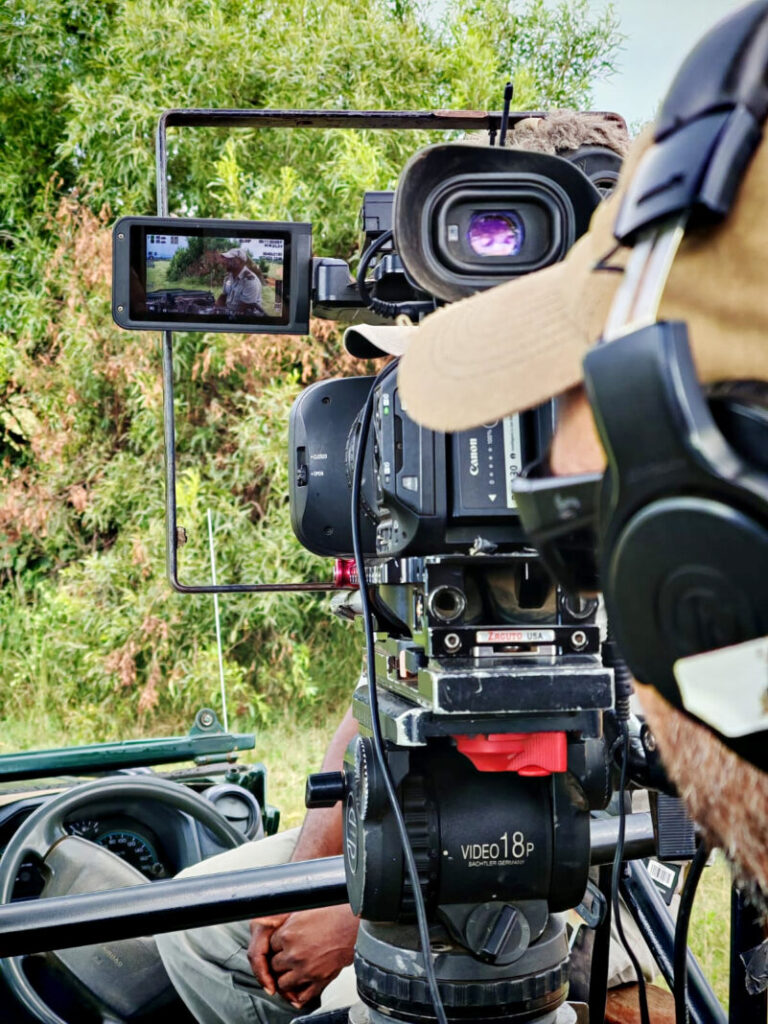
When not driving or showing us wildlife, Isaiah was answering viewers with a patience that makes it clear why he is one of the top guides in South Africa.
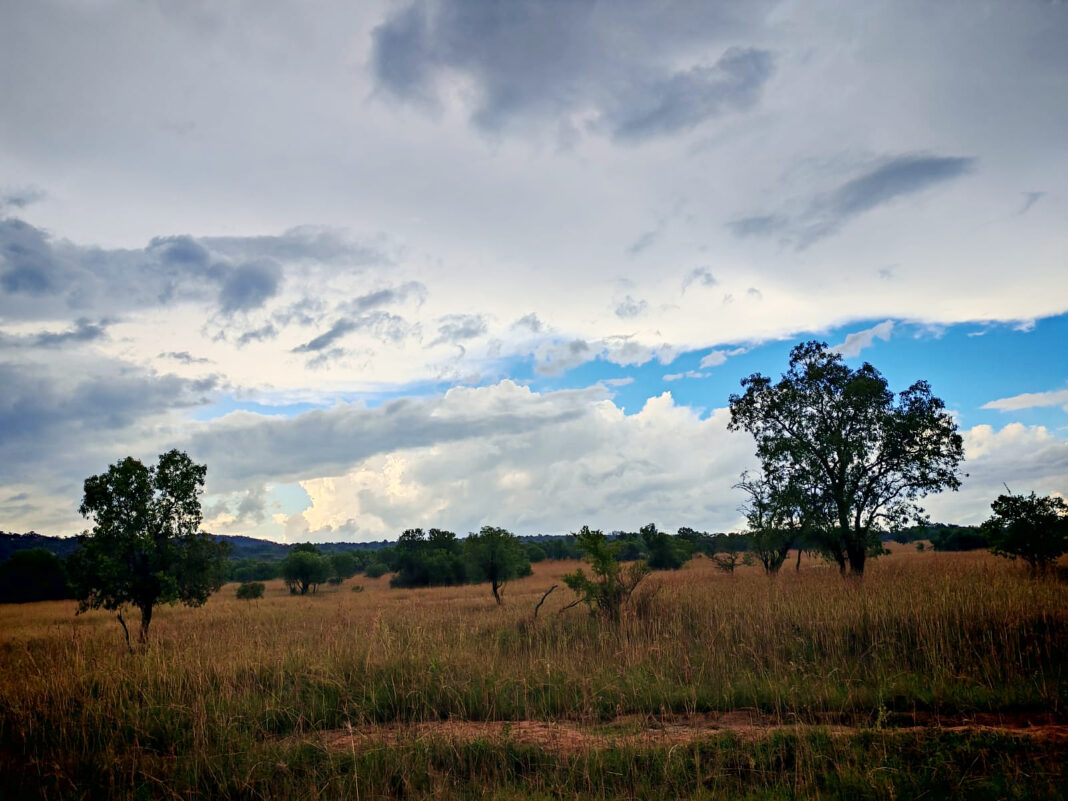
We sat huddled in the gloom, hoping that SOMETHING, ANYTHING would reveal itself in the wet grass.
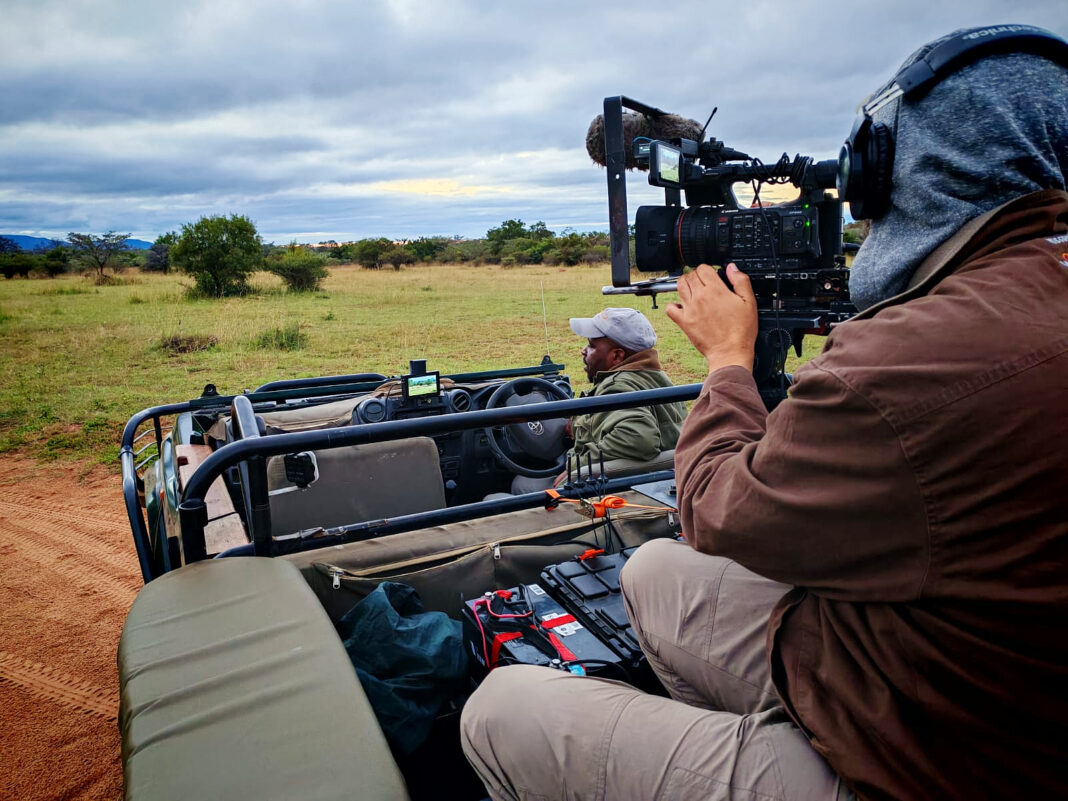
Do you remember the Kevin Costner baseball movie from 1989 called Field of Dreams?
The catch phrase from that picture was “If you build it, they will come”…
We were hoping that something similar would be true on this drive.
“If you wait long enough, they will appear”.
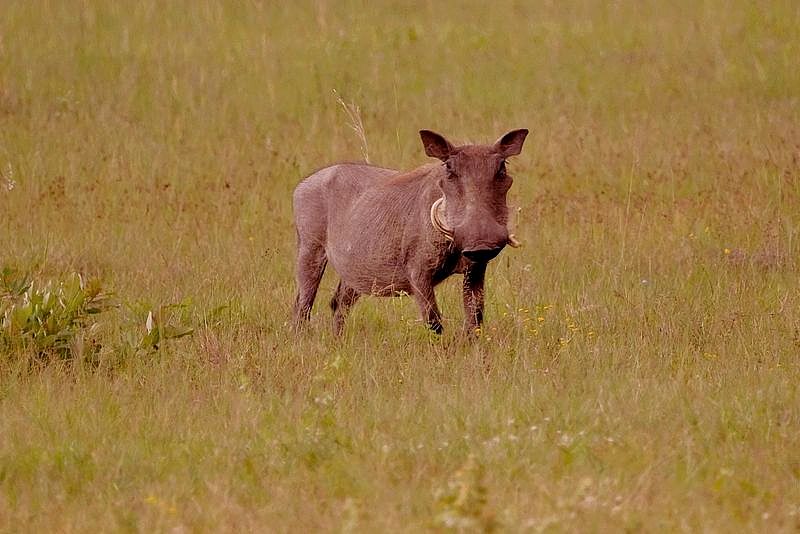
OH LOOK! A warthog. Not something that would normally get the adrenaline racing, but something is better than nothing…
Whether final control would cross to us when one of the other reserves had seen lions was a no-brainer.
So we watched and entertained ourselves with facts about warthogs.
For instance, did you know?
Warthogs don’t dig their own burrows—they borrow from animals like aardvarks. But here’s the clever bit: they enter backwards, so their tusks face the entrance, ready to defend against anything that might follow them in.
Small, scruffy, and surprisingly strategic—never underestimate a warthog.
Well, if you did not, now you do.
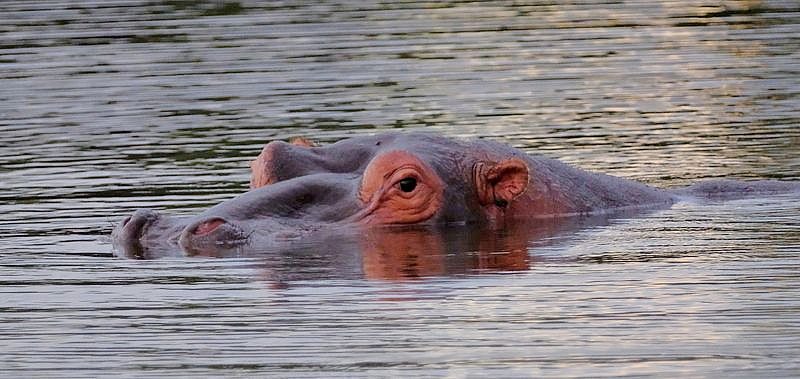
And all of a sudden, there were animals that Isaiah could chat about.
Like a hippo that popped up as we drove past.
FYI: A hippo is negatively buoyant, which means the animal sinks rather than floats in water.
Hippos don’t float like most mammals. Instead, they:
Move by walking, pushing off, or lightly bouncing along the bottom
Only rise to the surface to breathe.
But why do they sink, I hear you ask?
This comes down to basic physics and body design:
Their bodies are very dense (lots of muscle and heavy bone)
They have relatively little body fat compared to animals that float easily
Their lungs provide some buoyancy, but not enough to keep them afloat
So yes—hippos sink… and then casually stroll along the bottom like they own the place.
But keep a wary eye open, because should you find them on land, they can run at speeds in excess of 30k/ph. (19 mph)
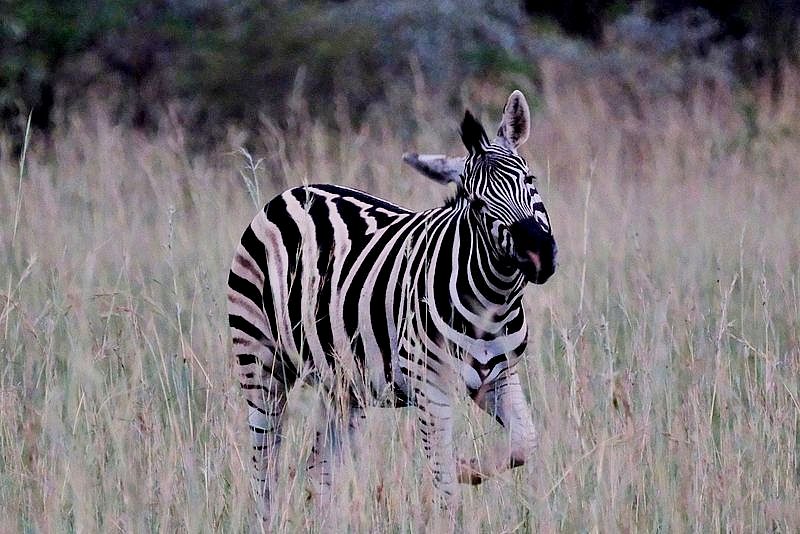
I caught this zebra shaking his head as we stopped to include him in the commentary.
Some interesting facts about these “horses in pyjamas”:
Each zebra’s stripe pattern is unique, much like a human fingerprint. These patterns help with individual recognition within a herd—and possibly even confuse predators when the group is moving together.
Research suggests that zebra stripes can deter biting flies like tsetse and horseflies. The contrasting patterns seem to disrupt how the insects perceive landing surfaces, making zebras a less appealing target.
Stylish, practical, and entirely one of a kind—nature doesn’t do basic when it comes to zebras.
BTW: A collective noun for zebra is a ‘dazzle’.
Perhaps will look at them differently the next time you find them out on the plains?
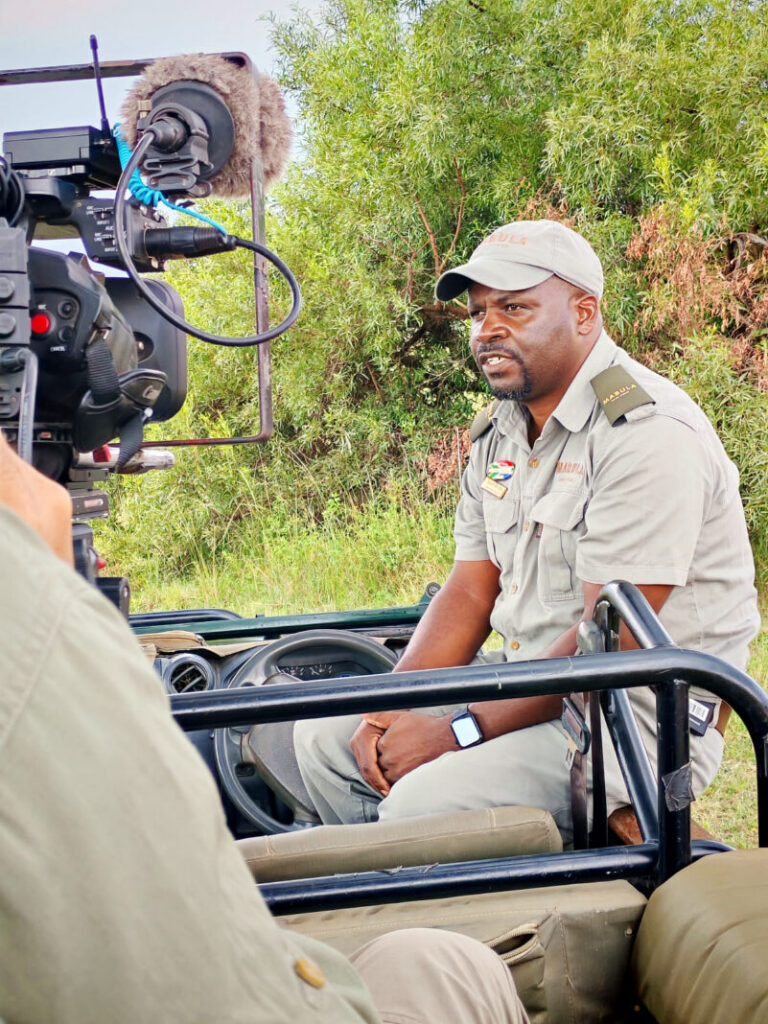
A final closing link before heading back to our lodge, where dinner and dry clothes awaited.
It would be rinse and repeat in the morning. All of us were hopeful that the rain would not return and the animals would…
We live in hope.

To find more of what is available via their website, click on the logo above.
Where can you watch:
Travel & Things is the proud winner of these prestigious awards from the digital British lifestyle magazine Luxlife.
The awards are in the categories:
Best Travel & Experiences Blog 2024 – South Africa
Best African Game Reserves & Lodges Travel Review Site 2025.
Best African Resorts and Retreats Award 2025.
And the most recent accolade… Most Engaging Travel & Lifestyle Blog 2026.
See who the guests have been since the inception of this YouTube channel.
Click on the logo above.

Looking for something to read? Click on the logo above to visit the Off the Shelf YouTube channel for interesting and up-to-date interviews and book reviews.
“Hard work never killed anybody, but why take a chance?”
Edgar Bergen
All images are the copyright property of

and may not be used without permission.

All images used in Travel & Things posts are edited using Ribbet software. To learn more about the product and what it offers both amateur and professional photographers, click on the logo above.